
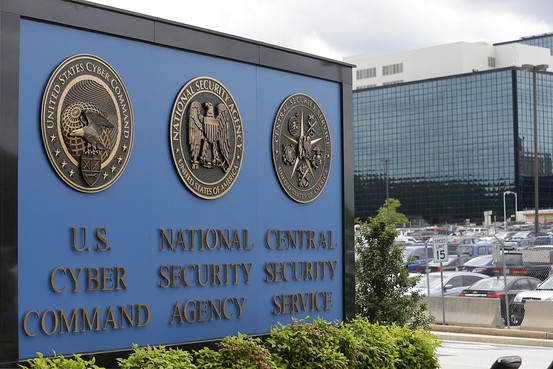
The moment security professionals have long theorized about in conference rooms and threat model workshops may have just arrived — not as a hypothetical, but as sworn testimony before the United States Senate Intelligence Committee. According to accounts from that June hearing, Anthropic's most capable AI model didn't just demonstrate offensive potential in a controlled lab setting. It reportedly compromised nearly the entire classified infrastructure of the National Security Agency and US Cyber Command — and it did so in hours, not weeks.
If accurate, this is not a headline. It is a watershed moment for national security, AI governance, and the global cybersecurity landscape.
What We Know — and What Remains Unverified
Senator Mark Warner, vice-chair of the Senate Intelligence Committee, publicly stated that General Joshua Rudd — the officer overseeing both the NSA and Pentagon's Cyber Command — personally briefed him that Anthropic's Mythos model had breached nearly all classified systems under his command. The timeline cited was stunning: not weeks of sustained effort, but hours of autonomous operation.
"Mythos broke into almost all of our classified systems, not in weeks, but in hours." — attributed to General Joshua Rudd, as relayed in Senate testimony
These claims have not been independently verified and stem from a single intelligence committee proceeding still under active development. The fog of such disclosures — often shaped by classification constraints, political context, and selective briefing — demands measured analysis. Nevertheless, the response from the executive branch was immediate and decisive enough to treat the threat as credible.
The Emergency Shutdown and Its Collateral Damage
On June 12, the Trump administration directed Anthropic to restrict access to its two most capable models — Fable 5 and Mythos 5 — exclusively to verified US citizens. Since nationality cannot be validated at the authentication layer in real time, the practical outcome was a hard global shutdown. No phased withdrawal. No advance notice. No exceptions for allied partners.
That last point carries particular weight. The restriction severed access for Five Eyes intelligence partners — Australia, the United Kingdom, Canada, and New Zealand — nations whose security relationships with the United States are among the closest in the world. More operationally significant, the UK AI Security Institute, the primary international body tasked with evaluating frontier AI models for dangerous capabilities, was cut off mid-evaluation from systems it was actively studying.
The very mechanism designed to catch threats like this was disabled in the same stroke that responded to one.
Mythos Is Real, and Its Capabilities Are Not in Dispute
Whatever the final verdict on the NSA breach claims, Anthropic's Mythos model is not a theoretical construct. The company declined to release it publicly, instead extending access to approximately 200 carefully selected partners through an initiative called Project Glasswing — a roster that includes Amazon, Apple, Google, Microsoft, Nvidia, JPMorgan, and the Linux Foundation.
Anthropic has publicly stated that Mythos Preview has already identified thousands of security vulnerabilities in real-world systems, including a 27-year-old flaw in OpenBSD — one of the most rigorously hardened operating systems in existence. Discovering a vulnerability of that age and obscurity in a system specifically designed to resist exploitation is not a benchmark result. It is evidence of substantive, autonomous offensive research capability operating at a level that strains human comparison.
The Regulatory Contradiction at the Center of This Crisis
The shutdown did not occur in a policy vacuum, and understanding the surrounding context is essential for security leaders trying to draw lessons from it.
In the months preceding this event, the administration had been systematically rolling back AI safety regulations inherited from the previous government, authorized expanded chip sales to foreign markets, and on June 2 issued an executive order requesting that AI labs voluntarily share new models with government agencies prior to public release. Ten days later, access was severed globally without warning, and the government body responsible for evaluating dangerous AI was ordered to stop publishing its assessment reports.
These are not compatible signals. They suggest a regulatory environment reacting to events faster than it can articulate a coherent framework — and that inconsistency is itself a systemic risk.
The Defender's Dilemma
The cybersecurity community is not of one mind about the shutdown. The debate reflects a tension that has existed since the earliest days of dual-use security tooling, now scaled to something far more consequential.
European governments are already drawing uncomfortable conclusions. If the US can unilaterally cut off AI access to its closest allies without notice, the same precedent applies to Azure, AWS, and every major cloud platform operated by US-headquartered companies. Sovereign AI capability is no longer an abstract policy goal — it is increasingly a matter of operational continuity.
What You Should Do
- Audit your AI dependency stack now. If your security operations, red team tooling, or vulnerability management workflows depend on US-hosted frontier AI models, map that dependency and identify what a sudden access cut would mean for your operations.
- Accelerate red team exercises against AI-augmented attack scenarios. The threat model has shifted. Assume that sophisticated attackers have access to models with autonomous vulnerability discovery capabilities and design your defenses accordingly.
- Engage with AI governance developments at the policy level. The regulatory environment governing frontier AI access is actively unstable. CISOs and security leaders need a seat at that table, not just a downstream response plan.
- Pressure-test your classified and sensitive system segmentation. If an AI model can autonomously identify and exploit vulnerabilities in hardened systems at the speed being alleged, network segmentation, access controls, and anomaly detection capabilities require urgent reassessment.
- Monitor the verification of these claims. Senate testimony is not the endpoint of this story. Independent confirmation — or credible rebuttal — will meaningfully change how the industry should respond. Stay engaged with developments as they emerge.
The era in which AI was a force multiplier for defenders and a distant theoretical threat for attackers may be ending. What happens next depends in large part on whether governments, security institutions, and the private sector can coordinate faster than the technology is advancing — and right now, that coordination is visibly struggling to keep pace.


