
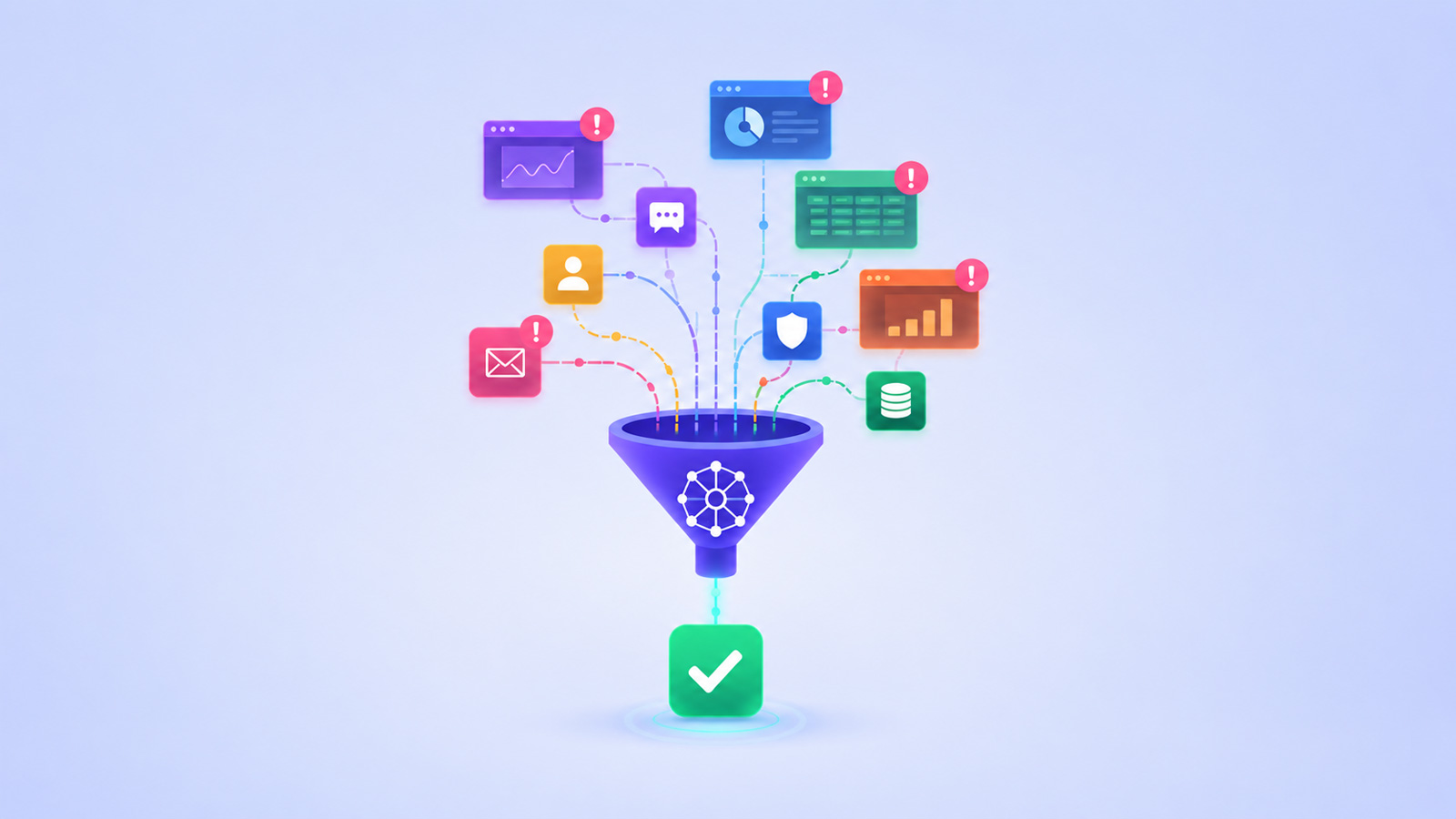
When network alerts start firing at 2 AM, every second counts. Yet most IT teams find themselves trapped in a digital maze—jumping between monitoring dashboards, ticketing systems, communication platforms, and infrastructure tools just to understand what's happening and who needs to act.
This fragmented approach to incident response isn't just inefficient—it's dangerous. While teams manually piece together context from disparate systems, network outages escalate, service disruptions spread, and business impact multiplies.
The Modern Incident Response Paradox
Organizations today deploy more monitoring and operational tools than ever before, promising better visibility and faster response times. Yet paradoxically, this tool proliferation often creates more friction during critical incidents.
Consider a typical network incident scenario: An alert triggers in the monitoring system, but responders must manually correlate it with identity management data, check infrastructure dashboards for root cause analysis, create tickets in multiple systems, and coordinate communications across various platforms. Each step requires context switching, manual data entry, and human decision-making—all while the clock ticks and systems remain compromised.
The problem compounds when teams operate in high-pressure environments. Stress reduces cognitive performance, making manual processes even more error-prone and time-consuming. Simple tasks that might take minutes during normal operations can stretch into lengthy investigations during incidents.
Where Traditional Workflows Break Down
Three critical bottlenecks consistently emerge in network incident response:
Alert Triage and Enrichment
Raw alerts rarely contain sufficient context for immediate action. Teams spend valuable time manually gathering additional information from network monitoring tools, identity systems, and threat intelligence platforms before they can even begin meaningful investigation.
Incident Prioritization and Routing
Determining who should handle an incident often requires manual analysis of system ownership, team availability, and expertise matching. This coordination overhead delays response initiation and can route incidents to suboptimal teams.
Cross-System Coordination
Modern incidents frequently span multiple systems and teams. Coordinating response actions across different tools, updating stakeholders through various communication channels, and maintaining consistent documentation creates significant administrative burden.
The Automation Imperative
Intelligent automation offers a compelling solution to these workflow challenges. By connecting disparate systems through automated workflows, organizations can eliminate much of the manual coordination that slows incident response.
AI-assisted workflows can automatically enrich alerts with relevant context from multiple sources, apply intelligent routing rules based on system ownership and team expertise, and orchestrate response actions across platforms without human intervention. This approach transforms incident response from a series of manual tasks into a coordinated, automated process.
The goal isn't to replace human expertise—it's to eliminate the manual busywork that prevents responders from focusing on high-value problem-solving activities.
Building Intelligent Response Workflows
Effective incident response automation requires careful design around real-world operational patterns. Successful implementations typically focus on:
What You Should Do
Organizations looking to improve their network incident response should start by auditing their current workflows to identify the most significant sources of delay and manual overhead. Key areas to examine include:
- Time spent manually gathering incident context from multiple systems
- Delays in routing incidents to appropriate response teams
- Administrative overhead in updating tickets, notifications, and documentation
- Coordination challenges when incidents span multiple teams or systems
Once these bottlenecks are identified, prioritize automation opportunities based on frequency and impact. Start with high-volume, low-complexity tasks that can be easily automated, then gradually expand to more sophisticated workflows.
Remember that successful automation requires ongoing refinement. Monitor workflow performance, gather feedback from response teams, and continuously optimize processes based on real-world incident patterns.
The future of network incident response lies not in deploying more monitoring tools, but in intelligently connecting the tools organizations already have. Through thoughtful automation and AI-assisted workflows, IT teams can transform fragmented response processes into coordinated, efficient operations that minimize downtime and maximize organizational resilience.


