
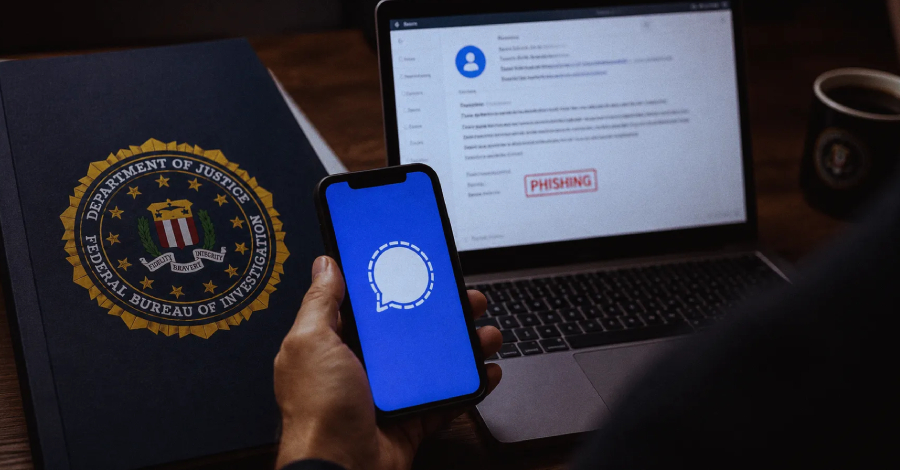
Encrypted messaging has long been considered the gold standard for secure communications. But a sophisticated, ongoing campaign attributed to Russian intelligence operatives is exposing a critical blind spot: the backup recovery mechanism that most Signal users never think twice about — until it's too late.
The FBI and the Cybersecurity and Infrastructure Security Agency (CISA) have jointly updated an earlier advisory to reflect a dangerous evolution in tactics. What began as a targeted phishing campaign against Signal users has now acquired a sharper edge. Attackers are no longer satisfied with simply intercepting messages in transit — they want the keys to the archive.
The New Weapon: Your Signal Backup Recovery Key
Signal's Backup Recovery Key is a powerful feature designed for user convenience. It allows someone to restore their full account — including complete private and group message histories — onto a new device. In the right hands, it's a lifeline. In the wrong hands, it becomes a master key to your most sensitive communications.
Russian intelligence-linked threat actors have added a calculated step to their social engineering playbook: coaxing targets into surrendering this key. The methods are deceptively simple — phishing lures, impersonation of trusted contacts or IT personnel, and urgency-driven prompts designed to bypass rational scrutiny.
Once a Backup Recovery Key is obtained, an attacker can silently restore the victim's account on a separate device, accessing the full historical record of private conversations — and the key remains valid indefinitely.
This persistence factor is what makes the tactic particularly alarming. Unlike a stolen password that can be reset, or a compromised session that expires, a Backup Recovery Key does not automatically invalidate after use. The attacker retains ongoing access unless the victim takes explicit, informed action to revoke it — something that can only happen if the victim is even aware the breach occurred.
Why Signal Users Are High-Value Targets
Signal's user base skews heavily toward journalists, government officials, diplomats, activists, attorneys, and intelligence community personnel — precisely the individuals whose communications represent high-value intelligence targets for state-sponsored actors. The platform's end-to-end encryption makes direct technical interception extraordinarily difficult, which is why adversaries are pivoting to the human layer.
This campaign represents a textbook example of social engineering as a bypass mechanism — rather than breaking the cryptography, attackers are manipulating users into voluntarily dismantling their own defenses.
The Broader Threat Landscape
This development fits within a broader pattern of Russian intelligence services targeting encrypted communications infrastructure and the people who rely on it. The campaign reflects an adversary that is highly adaptive, patient, and deeply familiar with the psychological vulnerabilities of its targets.
Security researchers have observed multiple delivery vectors in similar campaigns, including:
Each of these vectors is engineered to create a moment of lowered guard — and it only takes one such moment for the attacker to gain everything they need.
What You Should Do
Whether you're an individual user or a security leader responsible for protecting an organization's communications, the following steps are essential:
- Treat your Backup Recovery Key like a root password. Never share it with anyone under any circumstances, regardless of how legitimate the request appears. Signal will never ask for this key.
- Audit your linked devices immediately. Open Signal, navigate to Settings > Linked Devices, and remove any device you do not personally recognize. Attackers may already be silently monitoring your account.
- Regenerate your Backup Recovery Key. If there is any possibility your key has been exposed or observed, generate a new one. This invalidates the old key and closes the attacker's access window.
- Enable registration lock (Signal PIN). This adds an additional authentication layer that prevents unauthorized account re-registration even if an attacker has your phone number.
- Be deeply skeptical of account-related prompts. Any message, email, or notification — regardless of apparent sender — requesting your recovery key, QR code scan, or account credentials should be treated as a potential social engineering attempt.
- Brief your teams. CISOs and security teams should proactively educate staff, especially those in sensitive roles, on these specific tactics. Awareness is the first and most effective line of defense.
Key Takeaways
The encryption securing your messages is only as strong as the human decisions surrounding it. Russian intelligence operators have recognized this reality and are exploiting it with precision. The Signal Backup Recovery Key theft tactic is a reminder that even the most technically robust security tools can be circumvented through patience, social engineering, and a single moment of user error.
Organizations and individuals operating in sensitive environments should treat this advisory with urgency. Audit your Signal account today, verify your linked devices, and ensure that everyone in your network understands that no legitimate service will ever request a backup recovery key. The threat is active, the methodology is proven, and the window for prevention is now.


