
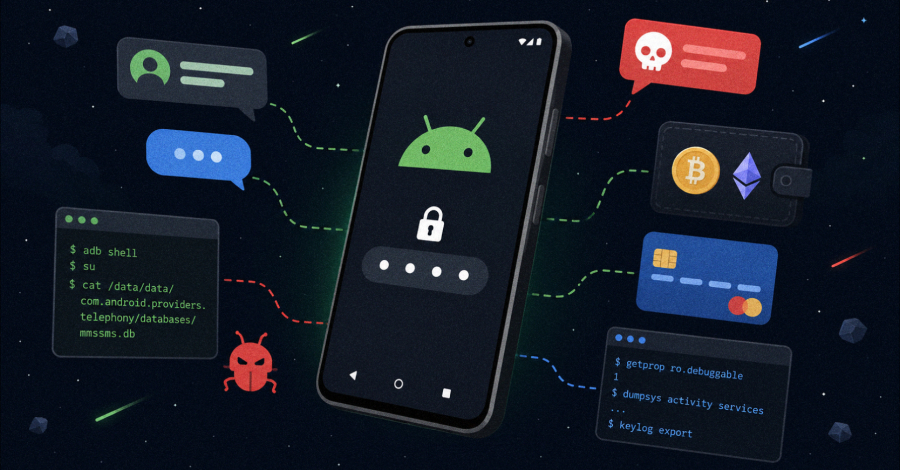
A sophisticated new Android banking trojan has emerged from the shadows of the mobile threat landscape, and its capabilities should concern anyone who manages financial accounts or cryptocurrency holdings on their smartphone. Dubbed Rokarolla, this malware represents a significant escalation in mobile-focused financial crime — combining credential theft, SMS interception, clipboard hijacking, and remote device control into a single, tightly engineered attack platform.
An Unusually Broad Target List
What distinguishes Rokarolla from its predecessors is sheer scope. The malware is designed to target 217 distinct banking and cryptocurrency applications, spanning a wide range of financial institutions and digital asset platforms. This is not a narrowly focused campaign against a single bank or region — it is a broad-spectrum assault on mobile financial infrastructure.
Security researchers catalogued an arsenal of 137 remote commands baked into the trojan's architecture. This command library gives an operator the ability to orchestrate nearly every aspect of a compromised device's behavior, from extracting sensitive credentials to manipulating what the user sees on screen.
How Rokarolla Operates
Once installed on a target device, Rokarolla wastes no time establishing deep persistence. Its attack chain relies on several interlocking capabilities:
"The combination of PIN theft, OTP interception, and real-time clipboard hijacking means a victim can lose their bank account credentials, bypass two-factor authentication, and redirect a crypto payment — all within a single session, without ever knowing it happened."
The Remote Command Infrastructure
The 137-command structure deserves particular attention. Most banking trojans operate with a relatively limited command set — enough to log keystrokes, capture screens, or forward messages. Rokarolla's expanded command library suggests a mature development operation with considerable resources and ambition.
This level of remote control means an operator can dynamically adapt their attack in real time. If an initial credential theft attempt fails, the attacker can pivot — issuing new commands to attempt different exfiltration methods, trigger overlay attacks, or simply monitor the device silently until the right moment. It transforms an infected phone into an always-on surveillance and theft platform.
The Cryptocurrency Angle
The clipboard substitution technique targeting crypto wallets is not new in concept, but its integration alongside traditional banking trojan capabilities marks a convergence that the security community has been watching with concern. Cryptocurrency transactions are irreversible. Once funds are redirected to an attacker-controlled wallet, there is no dispute resolution mechanism, no fraud department to call. The loss is permanent.
With Rokarolla simultaneously targeting both traditional banking apps and cryptocurrency platforms, it is positioned to attack financial assets across the entire spectrum of how modern users store and move money.
What You Should Do
Whether you are an individual user, a mobile security administrator, or a CISO responsible for a BYOD environment, the emergence of Rokarolla demands concrete action:
- Install apps exclusively from the Google Play Store and scrutinize permissions carefully before granting access, particularly to SMS and accessibility services.
- Do not disable Google Play Protect. If any application prompts you to turn it off during installation, treat this as an immediate red flag and remove the app.
- Verify clipboard contents before executing cryptocurrency transactions. Always manually confirm that the destination wallet address displayed matches your intended recipient — never assume the paste operation is trustworthy.
- Migrate away from SMS-based 2FA wherever possible. Authenticator apps and hardware security keys are substantially more resistant to interception attacks of this type.
- Deploy a reputable mobile threat defense (MTD) solution on devices that access corporate resources or financial applications. Behavioral detection is increasingly necessary as signature-based tools struggle to keep pace with novel malware families.
- Treat unexpected SMS messages or authentication prompts as potential indicators of compromise. If your phone begins behaving abnormally — unexpected battery drain, unusual data usage, or unfamiliar background processes — initiate an investigation immediately.
Key Takeaways
Rokarolla is a reminder that the mobile threat landscape has matured significantly. Banking trojans no longer steal passwords alone — they intercept authentication codes, capture device credentials, redirect financial transactions in real time, and actively suppress the security tools designed to catch them.
For enterprises, the lesson is clear: mobile endpoint security must be treated with the same rigor applied to traditional endpoints. For individuals, healthy skepticism about app permissions and vigilant verification of financial transactions are no longer optional habits — they are essential defenses in an environment where a single malicious install can silently drain both a bank account and a crypto wallet before the victim ever opens their banking app.


