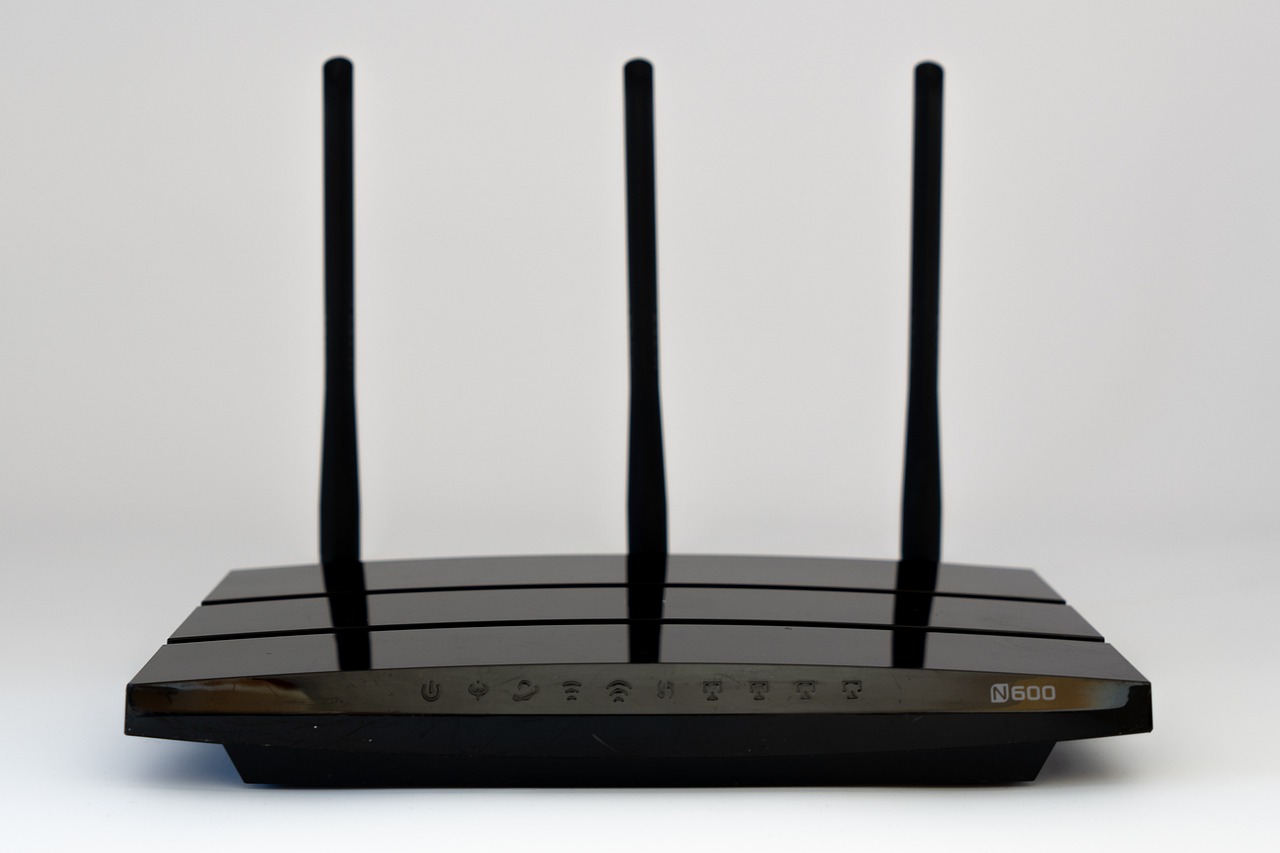
As reported by CISA in advisory ICSA-26-272-06, a critical pre-authentication vulnerability in MikroTik RouterOS demands immediate attention from network defenders across the globe. The flaw—tracked as CVE-2026-84411—carries a CVSS v3.1 base score of 9.8 (Critical) and enables unauthenticated remote attackers to achieve arbitrary code execution as root or trigger a denial-of-service condition using a single crafted HTTP request.
| Field | Detail |
|---|---|
| CVE | CVE-2026-84411 |
| CVSS v3.1 | 9.8 Critical — AV:N/AC:L/PR:N/UI:N/S:U/C:H/I:H/A:H |
| CVSS v4.0 | 9.3 Critical |
| Affected Product | MikroTik RouterOS versions prior to 7.24 |
| Vulnerability Type | CWE-191: Integer Underflow (Wrap or Wraparound) |
| Attack Vector | Unauthenticated, network-reachable, pre-auth HTTP request body handling |
| Impact | Root-level RCE or DoS via single crafted request |
| Patch Available | Yes — upgrade to RouterOS 7.23 or later |
| Active Exploitation | Not confirmed in the wild at time of advisory publication |
Why This Matters
This vulnerability sits in the highest tier of severity for several converging reasons. First, the vulnerable component is the web management service's HTTP request body parser, which processes input before authentication. There is no credential requirement, no session token, and no user interaction needed—any network-adjacent attacker can trigger it. Second, exploitation yields root-level code execution on the router itself, giving the attacker full control of routing tables, firewall rules, DNS configurations, and all transiting traffic. Third, the attack requires only a single crafted HTTP request, meaning exploitation is trivially automatable and ripe for mass scanning campaigns.
MikroTik devices—primarily RouterBOARD hardware running RouterOS—are deployed in massive numbers globally, particularly by wireless ISPs (WISPs), small-to-midsize enterprises, branch offices, and telecommunications providers in developing markets where their price-to-feature ratio is unmatched. The advisory specifically flags the Communications and Information Technology critical infrastructure sectors as affected, but the real blast radius extends well beyond formal critical infrastructure—any organization running an unpatched MikroTik device with its web interface exposed is at risk.
The Integer Underflow Pattern
The root cause is an integer underflow in the HTTP request body handling logic. Integer underflow vulnerabilities in network-facing parsers are a well-known and dangerous class: when an attacker manipulates a length or size field such that a subtraction operation wraps below zero, the resulting value is interpreted as an enormous positive number (in unsigned contexts), leading to out-of-bounds memory reads or writes. In a pre-auth HTTP handler, this typically translates to a heap corruption primitive that can be steered toward code execution—a pattern we have seen repeatedly in embedded web servers across router and IoT ecosystems.
Pre-auth root RCE on a routing device is the Holy Grail for threat actors building persistence infrastructure. A compromised MikroTik device can serve as an invisible pivot point, a C2 relay, a DNS poisoning platform, or a staging ground for lateral movement into the networks it connects.
Who Is Most Exposed
Shield53 Recommendations
Immediate Actions
- Patch now: Upgrade all MikroTik devices running RouterOS prior to 7.24 to version 7.23 or later. Download firmware from the official MikroTik website. Verify image integrity before deployment.
- Eliminate web management exposure: Disable the webfig/HTTP management interface on any interface facing untrusted networks. Use Winbox (with strong credentials) or SSH for administration instead.
- Enforce VPN-only remote access: If remote management is required, restrict management access to a VPN tunnel. Do not expose RouterOS management services directly to the internet.
- Audit your inventory: Identify all MikroTik devices across your estate. Given their prevalence in branch and edge deployments, shadow devices are likely. Use network scanning and asset management tools to enumerate every RouterOS instance and its version.
- Review firewall and routing rules: After patching, review existing firewall filter rules, NAT entries, and DNS settings for signs of prior tampering that may indicate historical compromise.
Detection and Monitoring
- Monitor web management service logs for abnormally large or malformed HTTP request bodies, repeated rapid single-request patterns from single sources, and unexpected service restarts indicating potential DoS trigger attempts.
- Deploy network-level IDS rules (Suricata/Snort) to flag HTTP requests targeting the RouterOS web management port with anomalous Content-Length or chunked encoding values consistent with integer underflow exploitation.
- Watch for unexpected outbound connections from MikroTik devices to unknown IPs—a strong indicator of post-exploitation C2 activity.
Broader Hardening
- Implement network segmentation so that management interfaces sit on dedicated management VLANs with restricted access.
- Disable all unused services on RouterOS devices (API, FTP, telnet, etc.) and restrict access to necessary services by IP allowlist.
- Establish a firmware lifecycle management process. MikroTik releases stable and long-term releases—track both and standardize on the current stable channel.
- Consider the broader router and edge device attack surface in your threat model. This class of vulnerability will recur across vendors; treat embedded device patching as a first-class operational priority.
Given the trivial exploitability, the root-level impact, and the enormous global deployment footprint of MikroTik hardware, we assess that active exploitation is likely within days to weeks if not already occurring in limited campaigns. Organizations should treat this as an emergency patching priority—not a routine monthly update. The window between advisory publication and weaponization in the wild is shrinking, and pre-auth RCEs on network infrastructure devices are among the first targets for both criminal botnet operators and state-sponsored actors building access footholds.