
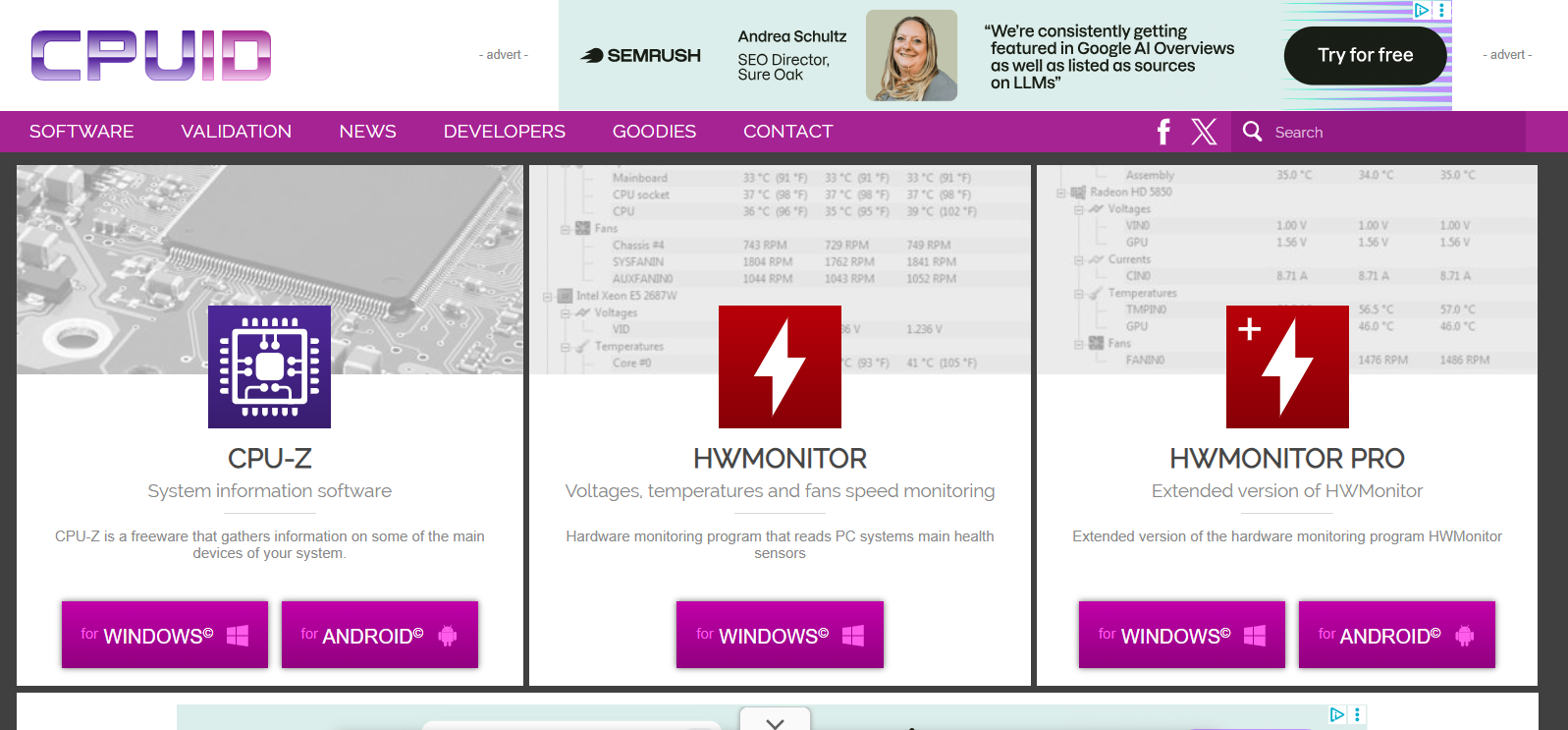
A brazen watering hole attack targeting one of the most trusted names in PC hardware utilities has exposed the fragility of the software supply chain, even for established developers with millions of users worldwide. The sophisticated campaign demonstrates how threat actors continue to evolve their tactics, turning legitimate software repositories into malware distribution networks.
Six-Hour Window Creates Global Impact
During a carefully orchestrated operation spanning six hours between April 9-10, 2026, cybercriminals successfully compromised the download infrastructure of a popular hardware monitoring platform. The attackers managed to redirect legitimate software requests to malicious domains, replacing authentic installers with weaponized versions containing the STX remote access trojan.
Security researchers identified that the compromise affected a secondary API component, causing the main website to randomly serve malicious download links instead of legitimate software packages. This tactical approach allowed the attackers to maintain plausible deniability while maximizing their infection potential during peak download hours.
Technical Sophistication Meets Operational Flaws
The malware deployment mechanism showcased both technical prowess and critical operational mistakes. Attackers distributed trojanized installers containing a malicious Dynamic Link Library ("CRYPTBASE.dll") that exploited DLL sideloading techniques to establish persistence and evade detection.
The embedded DLL served multiple functions:
However, the campaign's effectiveness was severely compromised by poor operational security. The threat actors reused the identical command and control infrastructure from a previous campaign targeting file transfer software users, making detection and attribution significantly easier for security researchers.
Global Victim Distribution Reveals Target Selection
Analysis of the infected systems reveals a diverse victim pool spanning both individual users and organizational networks across multiple industry sectors. The geographic distribution concentrated heavily in Brazil, Russia, and China, suggesting either targeted regional interests or opportunistic infections based on download patterns.
The victim count exceeded 150 confirmed infections, though the actual number likely remains higher due to detection limitations and delayed discovery. The mix of individual and enterprise victims indicates the attackers cast a wide net rather than pursuing specific high-value targets.
Infrastructure Reuse Exposes Campaign Connections
Forensic analysis revealed damning evidence linking this operation to previous malware campaigns. The embedded configuration data contained a "referrer" field set to "cpz" - an obvious reference to the compromised software - while utilizing identical command and control servers from an earlier fake software distribution campaign.
This infrastructure recycling represents a significant tactical error that enabled rapid threat intelligence correlation and victim notification. Security researchers could leverage existing detection rules and indicators of compromise, dramatically reducing the campaign's potential impact.
The reuse of known STX RAT payloads and previous C2 infrastructure made this attack significantly easier to detect and mitigate compared to campaigns using fresh tools and infrastructure.
Supply Chain Security Implications
This incident underscores the persistent vulnerability of software distribution channels, even for established developers with robust security practices. The compromise of a secondary API component demonstrates how attackers continuously probe for architectural weaknesses in complex web applications.
The relatively short exposure window - just six hours - still proved sufficient to compromise over 150 systems globally, highlighting the speed at which modern malware campaigns can achieve scale. This timeline pressure emphasizes the critical importance of rapid incident response and coordinated threat intelligence sharing.
What You Should Do
Organizations and individuals should immediately implement these protective measures:
- Audit Recent Downloads: Review DNS logs and system activity for connections to the identified malicious domains during the April 9-10 timeframe
- Enhance Download Verification: Always verify digital signatures and checksums for downloaded software, particularly system utilities
- Monitor Network Traffic: Deploy network monitoring tools to detect unusual command and control communication patterns
- Update Detection Rules: Ensure security tools include current STX RAT signatures and behavioral indicators
- Implement Software Inventory: Maintain comprehensive software asset management to quickly identify potentially compromised installations
The rapid resolution of this incident, combined with the attackers' operational mistakes, demonstrates both the ongoing threats facing software supply chains and the effectiveness of coordinated cybersecurity response efforts. However, it also serves as a stark reminder that no software distribution channel can be considered completely immune to compromise, regardless of reputation or technical sophistication.


