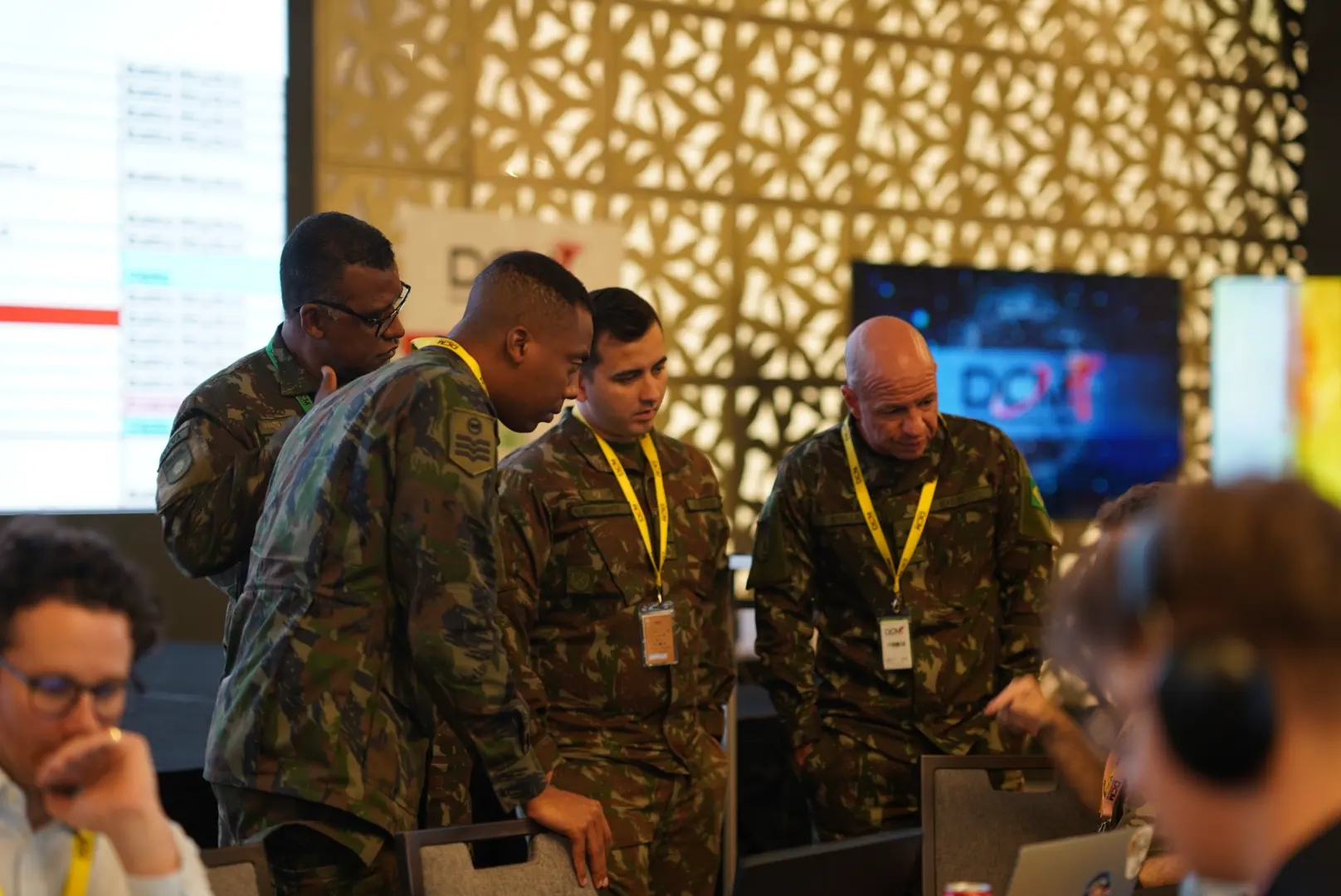
The largest military cyber exercise in UK history has concluded, and the technical lessons emerging from its security infrastructure deployment offer valuable insights for enterprise cybersecurity teams worldwide. Supporting over 2,500 personnel from 29 countries, the exercise demonstrated how modern security platforms can scale to handle massive, distributed defense operations.
The Challenge of Scale
Defence Cyber Marvel represents the gold standard for force-on-force cyber exercises, where defending Blue Teams protect critical infrastructure against sophisticated Red Team attacks. The 2026 iteration pushed boundaries further than ever before, coordinating 40 teams across a hybrid cloud environment hosting more than 5,000 virtual systems.
Unlike traditional corporate security deployments, this exercise required real-time coordination between geographically dispersed teams defending military systems during simulated regional crisis scenarios. The stakes were real: scoring based on system availability, attack detection speed, incident response quality, and restoration capabilities.
Architectural Evolution: From Isolation to Integration
The most significant technical breakthrough came through abandoning the traditional approach of deploying separate security clusters for each team. Instead, architects implemented a single, multi-tenanted Elastic Cloud deployment using Kibana Spaces and datastream namespaces for isolation.
This architectural shift addressed several critical challenges:
Multi-Tenancy in Practice
The implementation utilized Terraform automation to create isolated workspaces for each team, complete with dedicated dashboards, agents, and detection rules. Each team operated within their own space while sharing underlying infrastructure resources.
Perhaps most impressively, the system supported phased access control throughout the exercise. Teams began with access to deployed network policies, then expanded to include host nation networks and packet capture capabilities as scenarios intensified. This progression was managed through infrastructure-as-code, requiring only configuration changes rather than manual intervention.
The exercise went from one network to two without a single manual click in the security console.
Data Isolation at Enterprise Scale
Data segregation relied on namespace-based separation, ensuring each team's logs, metrics, and alerts remained completely isolated despite sharing infrastructure. This approach generated team-specific data streams while maintaining the performance benefits of centralized processing.
For enterprise security teams, this demonstrates how modern SIEM platforms can support complex organizational structures without sacrificing security or operational efficiency. The same principles apply whether managing multiple business units, geographical regions, or customer environments.
Real-World Application Beyond Military Exercises
The technical successes achieved in this military context translate directly to enterprise cybersecurity challenges. Organizations managing multiple subsidiaries, geographical locations, or customer environments face similar requirements for isolation, scalability, and centralized oversight.
Key benefits enterprise teams can expect from similar multi-tenant architectures include:
- Reduced Administrative Overhead: Manage multiple security domains from a single platform
- Improved Incident Response: Coordinate responses across organizational boundaries
- Enhanced Threat Intelligence: Aggregate attack patterns across all monitored environments
- Simplified Compliance: Maintain audit trails and access controls across complex structures
The Technology Stack
The deployment leveraged Fleet agent policies for endpoint monitoring, with automated provisioning ensuring consistent security coverage across all defended networks. Integration with cloud infrastructure enabled seamless scaling as exercise demands increased.
Infrastructure automation through Terraform proved essential for managing the complexity of coordinating 40 separate teams while maintaining operational security. This approach eliminated human error while enabling rapid configuration changes as exercise scenarios evolved.
What Enterprise Teams Should Do
For security leaders considering similar multi-tenant deployments, several key recommendations emerge from this large-scale implementation:
- Plan for Automation: Manual management becomes impossible at scale; invest in infrastructure-as-code from the beginning
- Design for Isolation: Ensure data segregation meets your compliance and security requirements before deployment
- Test Dynamic Scaling: Verify your platform can handle rapid expansion of monitoring scope and user access
- Implement Phased Rollouts: Plan how to gradually expand capabilities across different organizational units
- Establish Clear Governance: Define roles, responsibilities, and access controls for multi-tenant environments
Looking Forward
As cyber threats continue evolving in complexity and scale, the ability to coordinate defense across multiple domains becomes increasingly critical. The technical innovations demonstrated in this exercise provide a proven blueprint for enterprise security teams facing similar challenges.
The success of this multi-tenant approach at unprecedented scale validates the potential for similar architectures in corporate environments. For security leaders, the question isn't whether to embrace multi-tenant security platforms, but how quickly they can implement them effectively.