
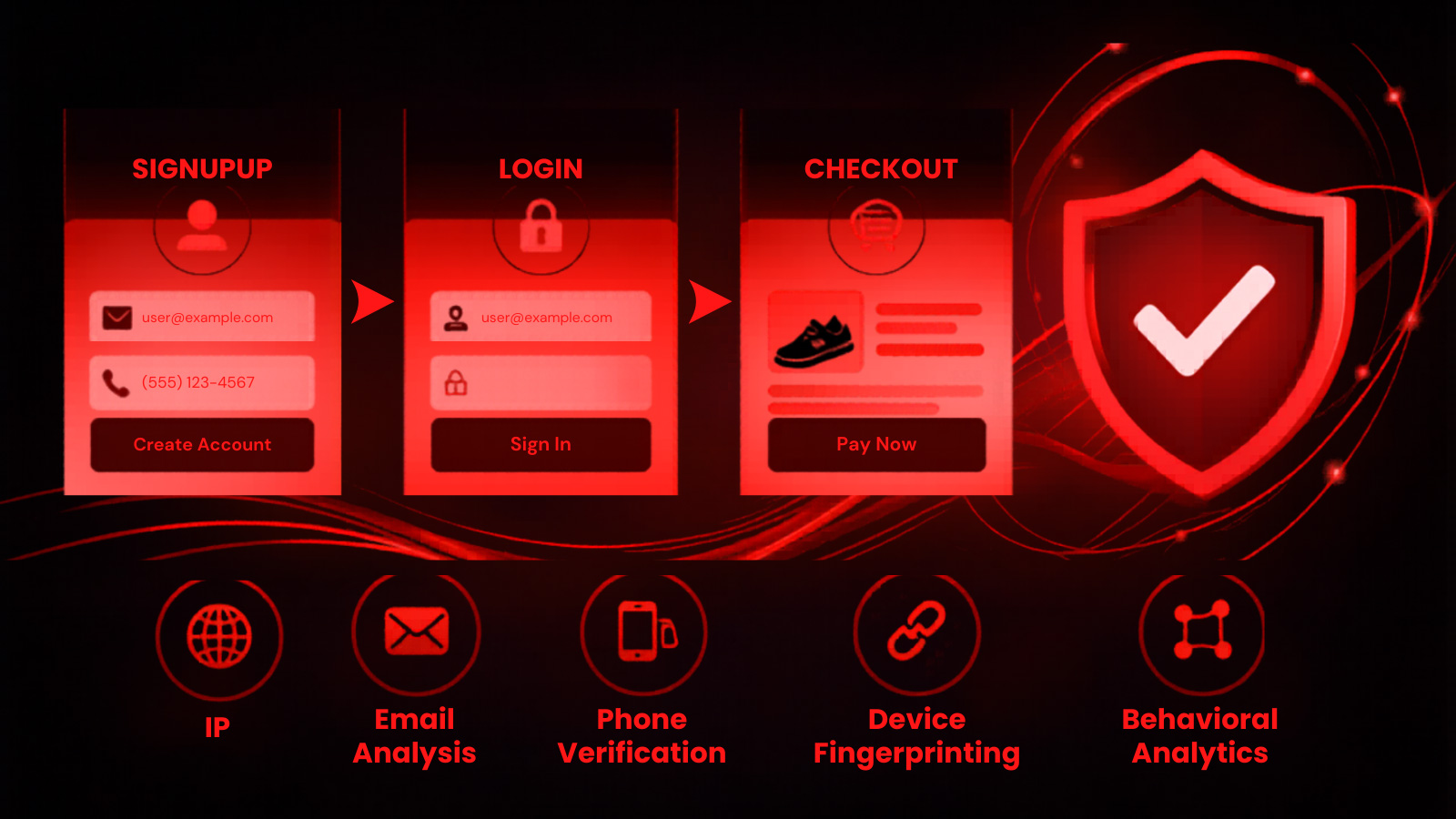
The traditional cybersecurity paradigm that forces organizations to choose between robust fraud protection and seamless user experience is rapidly becoming obsolete. As digital fraud schemes grow more sophisticated, security teams are discovering that the most effective defense strategies operate transparently, combining multiple intelligence layers to neutralize threats without introducing customer friction.
This evolution represents a fundamental shift in fraud prevention philosophy—from reactive gatekeeping to proactive threat identification that preserves business velocity while maintaining security integrity.
The Hidden Cost of Security Friction
Every additional authentication step, verification prompt, or security checkpoint carries measurable business impact. Research consistently demonstrates that excessive friction at critical touchpoints—account registration, login processes, and checkout flows—directly correlates with abandoned transactions and reduced customer lifetime value.
Conversely, insufficient fraud controls expose organizations to devastating financial losses. Industry analysis reveals that fraud typically consumes approximately 5% of annual organizational revenue, with sophisticated attacks targeting account takeover, synthetic identity creation, and payment exploitation becoming increasingly automated and persistent.
The challenge lies not in choosing between security and usability, but in deploying intelligent systems that eliminate the trade-off entirely.
Registration: The Critical First Defense
Account creation represents the highest-leverage intervention point in the fraud prevention lifecycle. Successfully blocking fraudulent registrations prevents cascading attacks across the entire customer journey—from promotional abuse to payment fraud and identity monetization schemes.
Advanced registration protection analyzes multiple data points simultaneously:
Modern platforms evaluate these signals in milliseconds, generating risk scores that enable automated decision-making without manual review delays or customer-facing verification steps.
Authentication: Defending Against Account Compromise
Account takeover attacks have evolved into industrial-scale operations utilizing credential stuffing toolkits, residential proxy networks, and automated testing frameworks capable of processing hundreds of thousands of login attempts per hour.
Effective authentication protection relies on behavioral pattern recognition rather than additional user challenges. Legitimate user sessions exhibit predictable characteristics: consistent device signatures, typical geographic locations, normal session timing, and recognizable usage patterns.
When anomalies are detected, intelligent systems can implement graduated responses—from silent monitoring and enhanced logging to targeted verification requests—calibrated to the specific risk profile rather than applying blanket security measures.
Transaction Protection: Safeguarding Revenue Streams
Checkout fraud combines identity deception, payment instrument abuse, and social engineering tactics to exploit the intersection of customer data and financial processing systems. This attack vector requires the most sophisticated detection capabilities, as fraudsters often present seemingly legitimate profiles supported by stolen or synthetic identity data.
Comprehensive transaction protection evaluates:
- Identity consistency across registration and payment data
- Geographic correlation between IP addresses and shipping locations
- Device history alignment with account login patterns
- Payment instrument velocity and historical chargeback rates
- Cross-merchant fraud intelligence and shared threat indicators
Implementing Tiered Response Strategies
The most effective fraud prevention architectures implement graduated response frameworks that map risk assessment outcomes to proportional security measures. This approach ensures that high-confidence legitimate users experience zero additional friction, while genuinely suspicious activities receive appropriately intensive scrutiny.
Low-risk sessions proceed with standard processing flows. Medium-risk activities trigger lightweight verification measures—such as device-based push notifications or email confirmation links. Only the highest-risk sessions, where multiple fraud indicators converge, warrant transaction blocks or account restrictions.
This tiered methodology maximizes both security effectiveness and operational efficiency, focusing investigative resources on the most credible threats while maintaining seamless experiences for the vast majority of legitimate customers.
Key Takeaways for Security Leaders
- Integrate multiple intelligence sources: Combine identity, device, network, and behavioral signals for comprehensive risk assessment
- Implement real-time scoring: Deploy systems capable of millisecond risk evaluation without introducing processing delays
- Design graduated responses: Map security measures to risk levels rather than applying uniform friction across all sessions
- Monitor business impact: Track conversion rates and customer satisfaction metrics alongside security effectiveness indicators
- Leverage shared threat intelligence: Participate in fraud intelligence networks to benefit from cross-industry threat visibility
Organizations that successfully integrate these principles will find that advanced fraud prevention enhances rather than hinders business growth, creating competitive advantages through superior customer experiences backed by robust security architectures.


