
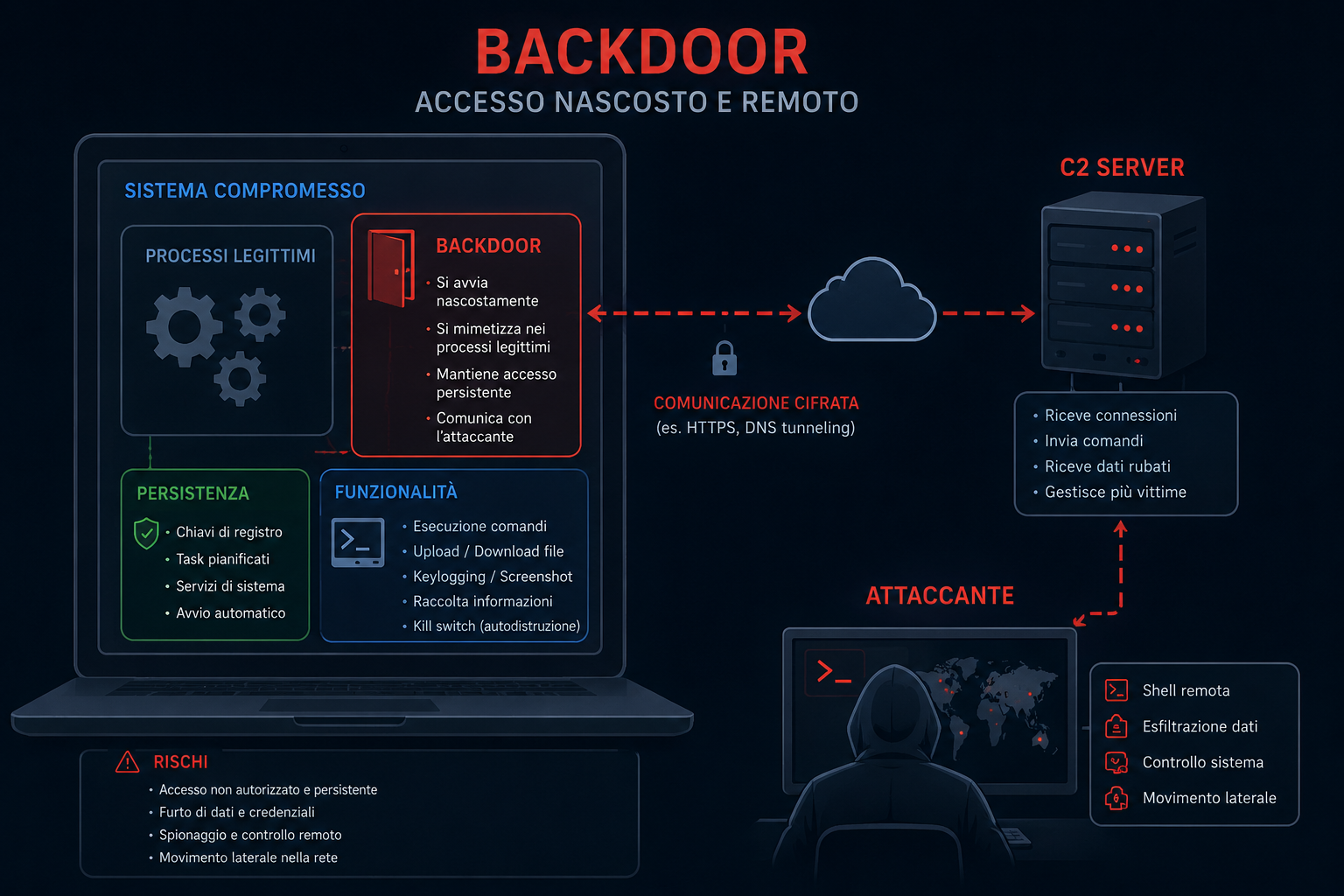
The most dangerous moment in a ransomware intrusion is rarely the encryption event itself. It's the weeks or months before it — when an adversary has already established a quiet, persistent foothold and is simply waiting for the right buyer or the right moment. A newly documented backdoor called Mistic appears purpose-built for exactly that window.
An Access Broker's Most Valuable Asset
Security researchers have identified Mistic as a custom backdoor deployed in financially motivated intrusions targeting insurance firms, educational institutions, IT service providers, and professional services organizations. The malware has been active since at least April 2026 and is attributed to an initial access broker tracked publicly as KongTuke — also known internally to some threat intelligence teams as Woodgnat — a group that has been operating since at least 2024.
The business model here is straightforward and disturbingly efficient. KongTuke breaks into high-value networks, plants persistent remote access tools, and sells that access to downstream ransomware operators. Known affiliates of that access pipeline include some of the most active ransomware groups currently in operation: Qilin, Interlock, Rhysida, Akira, 8Base, and Black Basta. When you understand who's buying, the sophistication of the tool being sold makes considerably more sense.
How Mistic Gets In — and Stays Hidden
The infection chain Mistic uses is a study in deliberate camouflage. The attack begins with DLL sideloading — a technique that abuses the way Windows applications load code libraries. Specifically, the legitimate Microsoft executable MpExtMs.exe is manipulated into loading a malicious DLL named version.dll. That first-stage loader then drops the primary Mistic payload, delivered as a file called EndpointDlp.dll.
That naming convention is not accidental. The filename closely mimics Microsoft's own endpoint data loss prevention tooling, making it credible to both automated security scanners and human analysts doing a quick triage review. It's the kind of detail that separates opportunistic malware development from deliberate operational tradecraft.
Alongside the backdoor, a separate .NET component displays a convincing fake login screen to harvest credentials — layering social engineering directly into the technical compromise. The campaign also makes use of a broad toolkit of native Windows utilities: PowerShell, Curl, Certutil, WMIC, Net.exe, and Reg.exe are all observed in post-compromise activity supporting reconnaissance, persistence, credential theft, and lateral movement.
The Technical Anatomy of a Long-Game Tool
Once Mistic establishes its command-and-control connection, it offers operators a capable and flexible remote management interface. Its documented capabilities include:
That last pair of capabilities is where Mistic distinguishes itself from commodity malware. Fileless execution eliminates one of the most reliable forensic artifacts analysts look for during incident response. The self-deletion mechanism means that if the operator senses heat — whether from an EDR alert, an IR engagement, or simply a completed sale — they can erase the tool's presence entirely, complicating attribution and remediation.
The combination of in-memory execution and a built-in kill switch signals an operator who prioritizes long-term, low-visibility access above all else. This is infrastructure designed to survive, not just to strike.
Part of a Broader, Flexible Arsenal
Mistic does not operate in isolation. In at least one confirmed intrusion, it was deployed in sequence with ModeloRAT, another remote access trojan attributed to the same threat cluster. ModeloRAT has been distributed through Microsoft Teams-based social engineering — a delivery mechanism that exploits trusted communication platforms to bypass perimeter controls.
The broader KongTuke toolkit further underscores the group's operational maturity. Observed components include WinPython and Node.js runtimes for flexible scripting, the native finger.exe utility for covert data transfer, a fraudulent browser extension posing as a security product called NexShield, an encrypted .NET payload named GateKeeper, and loaders including MintsLoader and D3F@ck Loader. This diversity signals a group that actively rotates delivery mechanisms and tooling to stay ahead of detection — a characteristic of sustained, well-resourced threat actors rather than opportunistic criminal operators.
The emergence of Mistic also reflects a broader industry trend worth noting: ransomware-adjacent threat actors are increasingly investing in custom malware development rather than relying exclusively on living-off-the-land techniques or commodity tools. Custom implants are harder to detect, harder to attribute, and harder to remediate — and their development points to access brokers who are maturing into something closer to full-service cybercrime enterprises.
What You Should Do
For security teams, Mistic's tradecraft translates into concrete defensive priorities:
- Audit DLL load behavior: Monitor for unexpected DLL loads by signed Microsoft binaries, particularly in directories where those executables do not typically reside. DLL sideloading via trusted processes is a reliable detection surface when telemetry is properly configured.
- Scrutinize endpoint security tool names: Files mimicking Microsoft security product naming conventions in unusual paths should trigger immediate investigation. Filenames like
EndpointDlp.dlloutside of expected Microsoft installation directories are a red flag. - Prioritize memory-based detection: Because Mistic executes entirely in memory, endpoint detection that relies on file scanning alone will miss it. Behavioral analytics and in-memory scanning capabilities are essential.
- Treat Teams and ClickFix lures as active threat vectors: Social engineering through trusted communication platforms is a confirmed delivery mechanism for this threat cluster. User awareness training should specifically address these scenarios.
- Hunt for lateral movement indicators early: The use of standard Windows administration utilities for post-compromise activity means defenders should baseline legitimate usage patterns and alert on anomalous combinations of Certutil, WMIC, and Net.exe in close temporal proximity.
- Assume persistence survives the obvious IOCs: Given Mistic's self-deletion capability, a clean bill of health from a surface-level scan does not mean an adversary is gone. Full memory forensics and network traffic analysis should accompany any suspected KongTuke-linked incident.
The access broker model that KongTuke operates is one of the most consequential business structures in modern cybercrime. Defenders who focus exclusively on the ransomware payload at the end of the kill chain are already too late. The real contest is happening months earlier — in the quiet persistence of tools like Mistic, waiting for the right moment.


