
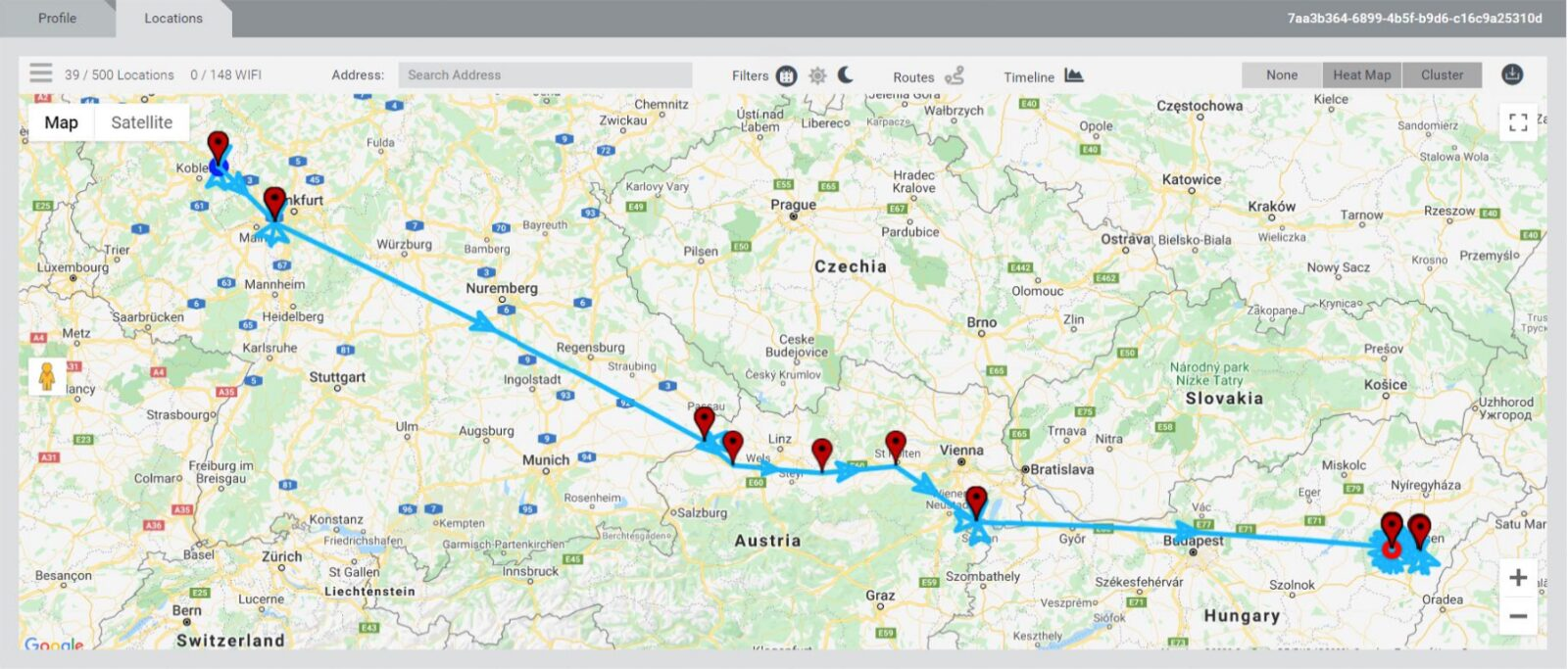
The digital advertising ecosystem has evolved into an unprecedented surveillance apparatus, with new revelations showing that government agencies across multiple continents are leveraging commercial ad data to track hundreds of millions of devices without traditional oversight mechanisms.
Recent investigative research has exposed a sophisticated surveillance operation utilizing advertising intelligence—dubbed ADINT—to monitor device movements, behaviors, and associations on a massive scale. The operation affects an estimated 500 million devices globally, representing one of the largest documented cases of ad-based government surveillance.
The Architecture of Commercial Surveillance
The surveillance mechanism operates through the massive data collection infrastructure that powers modern digital advertising. Every time a mobile device interacts with an app or website, it generates valuable intelligence: mobile advertising identifiers, GPS coordinates, Wi-Fi connection data, and behavioral patterns derived from app usage and online activities.
This information flows through real-time bidding (RTB) systems and software development kits (SDKs) embedded in countless applications. What was originally designed to target advertisements has been repurposed into a comprehensive tracking network that can monitor individuals' daily routines, social connections, and sensitive locations.
The surveillance platform processes extensive personal data including device identifiers, precise timestamps, location coordinates derived from both GPS and Wi-Fi positioning, inferred locations such as home and workplace addresses, detailed device specifications, and comprehensive behavioral profiles. The system can identify which applications users interact with and build detailed demographic profiles including age, gender, interests, and lifestyle patterns.
Global Infrastructure and Deployment
Investigation into the surveillance network's infrastructure reveals a sophisticated global operation spanning 25 countries. The majority of servers supporting these surveillance deployments are concentrated in the United States with 126 identified servers, followed by the Netherlands with 32 servers, and significant presences in Singapore, Germany, Hong Kong, and the United Kingdom.
The infrastructure extends beyond traditional surveillance markets, with identified servers in Kenya, Iraq, United Arab Emirates, Indonesia, India, Mexico, Colombia, Australia, Japan, and multiple European nations including France, Sweden, Norway, Ireland, and Cyprus. Most of this infrastructure operates on Microsoft Azure's cloud platform, indicating enterprise-level deployment capabilities.
Evidence suggests the network utilizes dynamic infrastructure, with some servers maintaining brief operational periods while others persist for years, potentially indicating different operational requirements or security considerations for various surveillance campaigns.
Capabilities and Operational Scope
The surveillance system offers both historical analysis and near real-time tracking capabilities. Historical data extends back up to three years, while real-time updates occur every 4 to 24 hours depending on data source availability and operational requirements.
Advanced features include geofencing capabilities that can trigger alerts when devices enter or exit specific locations, comprehensive travel pattern analysis, and relationship mapping between different devices to identify social networks and associations. This enables intelligence agencies to build comprehensive pictures of target individuals' lives, including their social circles, regular locations, travel patterns, and behavioral preferences.
Legal and Privacy Implications
The widespread adoption of ad-based surveillance raises significant legal and privacy concerns. Unlike traditional surveillance methods that typically require warrants or judicial oversight, ad-based tracking exploits commercially available data that exists in legal gray areas.
While vendors claim compliance with privacy regulations and assert that user consent covers such uses, these claims face significant scrutiny from privacy advocates and legal experts. The aggregation and analysis capabilities mean that even supposedly anonymous data can be used to identify specific individuals and reveal highly sensitive personal information.
The practice effectively bypasses traditional privacy protections by exploiting the commercial data ecosystem. Users who consent to advertising personalization likely never intended to authorize government surveillance of their daily activities and associations.
What Organizations Should Do
Organizations must recognize that their digital infrastructure choices have surveillance implications. Companies should audit their advertising partnerships and third-party SDKs to understand what data they're sharing and with whom.
Privacy-conscious organizations should implement data minimization practices, reducing the amount of user data they collect and share. This includes regularly reviewing advertising partnerships and implementing technical measures to limit data exposure.
Security teams should educate employees about mobile privacy settings and the implications of location sharing. Enterprise mobile device management should include policies that limit unnecessary data collection and sharing.
Legal and compliance teams need to understand how their organization's data might be accessed by government agencies through commercial data brokers, and implement appropriate contractual protections where possible.
The Future of Digital Privacy
This surveillance network represents a fundamental shift in how governments can monitor populations. The scale and sophistication of ad-based surveillance systems demonstrate that traditional privacy frameworks are inadequate for the digital age.
As these capabilities become more widespread and sophisticated, the boundary between commercial data collection and state surveillance continues to blur. Organizations and individuals must adapt their privacy practices to this new reality where advertising ecosystems have become surveillance infrastructure.


