
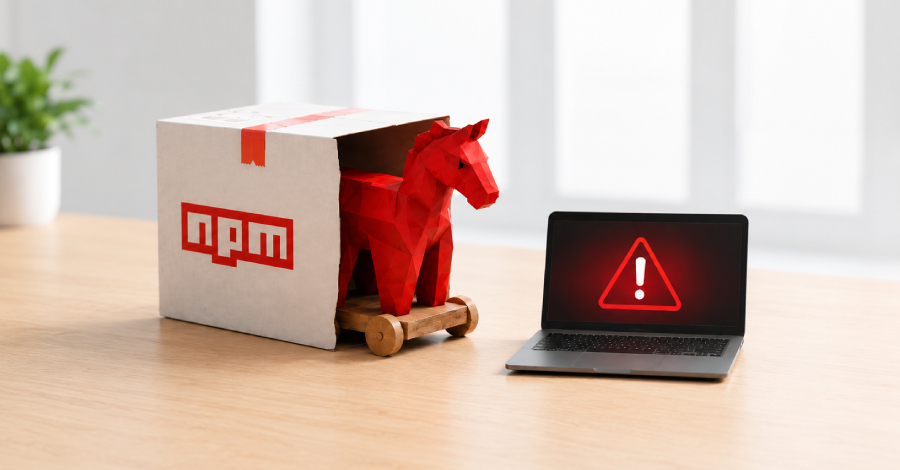
The open-source software supply chain has once again become a hunting ground for malicious actors. Cybersecurity researchers have uncovered a cluster of fraudulent npm packages carefully crafted to impersonate legitimate PostCSS development utilities — widely used tools in modern front-end and Node.js workflows. Beneath their convincing facades, these packages deliver a fully functional Windows-based remote access trojan (RAT), granting attackers covert control over compromised developer machines.
The Anatomy of a Supply Chain Deception
Three packages were identified as part of this campaign, all published within the past month by a single npm account:
Together, these packages accumulated over 1,000 downloads before being flagged — a seemingly modest number that belies the potential damage. In software development environments, a single compromised developer workstation can serve as a pivot point into broader organizational infrastructure, CI/CD pipelines, cloud credentials, and proprietary source code repositories.
The naming convention here is deliberate and sophisticated. PostCSS is a widely adopted CSS transformation framework with millions of weekly downloads. By mimicking its naming patterns — particularly terms like minify, selector, and parser — the threat actor exploited a technique known as typosquatting or combosquatting, banking on developers installing packages without rigorous scrutiny of their provenance.
Remote Access Trojans in the Developer Ecosystem
The payload at the core of these packages is a Windows RAT — malware specifically designed to establish persistent, covert remote access to an infected host. RATs of this nature typically offer adversaries a broad capability set, including:
- Keystroke logging and credential harvesting
- File system access and exfiltration
- Screenshot and webcam capture
- Execution of arbitrary commands
- Lateral movement across internal networks
When deployed on a developer's machine, these capabilities translate directly into access to API keys, SSH credentials, cloud service tokens, version control systems, and internal tooling — the crown jewels of many software organizations.
A compromised developer workstation is not just an endpoint incident. It is a potential breach of every system, repository, and deployment environment that developer touches.
Why npm Remains a High-Value Attack Surface
The npm registry hosts over two million packages and sees billions of downloads each week. Its permissive publishing model — which allows anyone to register an account and upload packages with minimal vetting — makes it an attractive distribution channel for malicious actors. While npm's security team actively removes malicious packages, the window between publication and takedown can be sufficient for meaningful infection rates.
This campaign follows a pattern that has become distressingly familiar: threat actors identify high-trust ecosystems, create plausible package names, embed malicious installation scripts (commonly within postinstall hooks), and wait for unsuspecting developers to run npm install. The attack is largely passive once the package is live — the registry itself does the distribution work.
What You Should Do
For Individual Developers
- Audit your dependencies immediately. Search your
package.jsonandpackage-lock.jsonfiles for any of the three identified package names and remove them without executing further code. - Scrutinize new packages before installation. Check the author's publication history, the number of legitimate dependents, and the age of the package. A newly created account publishing security-sensitive tooling is a red flag.
- Use
npm auditand third-party SCA tools regularly to surface known-malicious packages in your dependency tree.
For Security and Engineering Teams
- Implement a private registry or allowlist policy. Tools like Artifactory, Verdaccio, or npm's own organization scoping can restrict which packages developers are permitted to install.
- Enforce lockfiles in CI/CD pipelines. Require
npm ciinstead ofnpm installin automated environments to prevent unintentional resolution of unexpected package versions. - Monitor for suspicious postinstall script behavior. Solutions that sandbox or inspect lifecycle scripts before execution can interrupt malicious payload delivery before it completes.
- Treat developer workstations as high-value targets. Endpoint detection and response (EDR) tooling should be deployed on engineering machines with the same rigor applied to production servers.
For CISOs and Risk Leaders
- Integrate software composition analysis (SCA) into your secure development lifecycle. Supply chain attacks are now a primary threat vector, and manual code review alone is insufficient.
- Establish an incident response playbook specific to dependency-based compromise. The forensic trail left by a RAT installed via npm can be difficult to trace without pre-established logging and monitoring baselines.
The Bigger Picture
This campaign is a reminder that the software supply chain is not an abstract concern — it is an active battlefield. Attackers have recognized that breaching a developer's machine can yield far greater access than targeting hardened perimeter infrastructure directly. Until the open-source ecosystem develops more robust, systemic defenses against package impersonation, the burden of vigilance falls heavily on developers and the security teams supporting them.
Trust, once the foundation of open-source culture, is now being weaponized. The most effective countermeasure is a culture of skepticism — paired with tooling that makes safe behavior the path of least resistance.


