
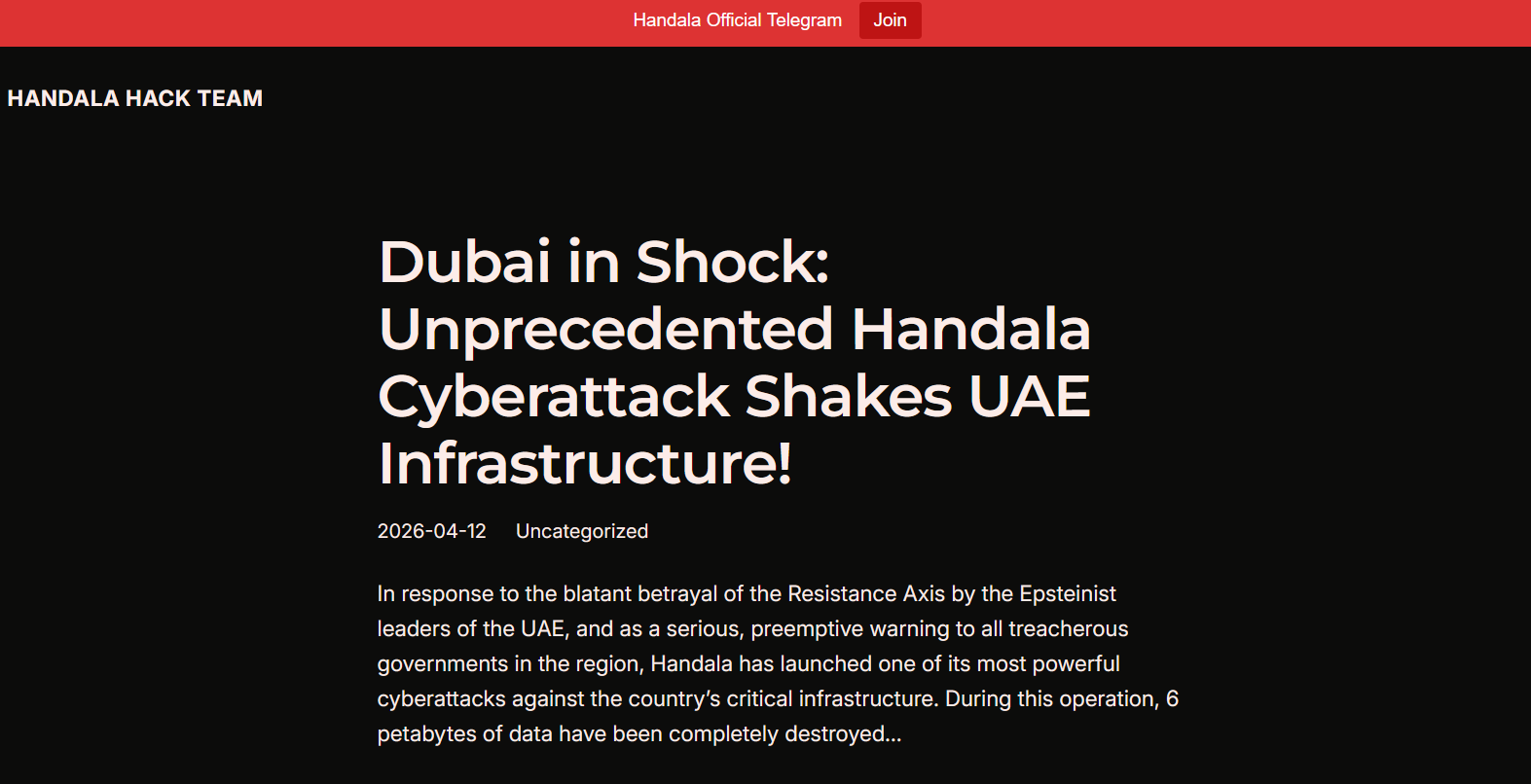
A sophisticated cyber operation targeting the United Arab Emirates has emerged as one of the most significant attacks against Gulf state infrastructure in recent months. The Iranian-affiliated group Handala claims to have successfully penetrated three major Dubai government organizations, marking a dangerous escalation in regional cyber warfare.
Massive Scale of Destruction Reported
The threat actors assert they have compromised the Dubai Courts Department, Dubai Land Department, and Dubai Roads & Transport Authority in a coordinated assault that allegedly resulted in the destruction of six petabytes of critical government data. Additionally, the group claims to have exfiltrated 149 terabytes of sensitive information from these vital civic systems.
This attack represents a concerning shift in the targeting of civilian infrastructure that millions of residents depend upon daily. The Dubai Roads & Transport Authority alone manages the emirate's entire public transportation network, while the Dubai Courts Department handles all judicial proceedings for the city-state.
Strategic Motivations Behind the Attack
Intelligence analysis suggests this operation extends far beyond typical cybercriminal motivations. The attackers framed their assault as retaliation against what they termed "blatant betrayal of the Resistance Axis," indicating geopolitical tensions rather than financial gain drove this campaign.
Handala has positioned itself as a pro-Palestinian hacktivist collective, though cybersecurity researchers widely assess the group as a front organization for Iranian state-sponsored activities. This assessment aligns with the group's sophisticated capabilities and targeting patterns that consistently support Iranian strategic objectives.
The targeting of civilian government infrastructure crosses traditional red lines in cyber conflict, potentially affecting millions of UAE residents who rely on these services daily.
Pattern of Escalating Cyber Aggression
This Dubai attack follows a series of increasingly bold operations attributed to Handala throughout 2026. The group recently claimed responsibility for devastating attacks against Israeli defense contractors and major international corporations, demonstrating expanding capabilities and willingness to target diverse sectors.
Of particular concern was their alleged breach of a major medical technology company, where they claimed to have remotely wiped hundreds of thousands of employee devices across 79 countries. Such destructive capabilities represent a significant evolution from traditional espionage-focused operations.
Advanced Tradecraft and Techniques
Security researchers have documented Handala's sophisticated attack methodology, which typically combines:
The group's ability to execute simultaneous attacks against multiple government agencies suggests extensive planning, reconnaissance, and coordination capabilities typically associated with nation-state actors.
Regional Implications and Response
This attack occurs against the backdrop of heightened tensions between Iran and Gulf Arab states, particularly regarding regional security arrangements and diplomatic relationships with Israel. The UAE's growing cooperation with Israeli technology and defense sectors appears to have made it a priority target for Iranian cyber operations.
The simultaneous targeting of judicial, transportation, and land registry systems suggests an intent to maximize disruption to Dubai's functioning as a major international business hub. Such attacks could undermine confidence in the emirate's digital infrastructure among international partners and investors.
What Organizations Should Do
Government agencies and critical infrastructure operators, particularly in the Middle East, should immediately reassess their security posture in light of this escalation:
- Enhance monitoring of network traffic and user behavior analytics to detect anomalous activities
- Implement robust backup strategies with offline storage capabilities to protect against wiper attacks
- Strengthen email security with advanced anti-phishing solutions and user awareness training
- Develop incident response plans specifically addressing destructive cyber attacks
- Coordinate with national cybersecurity agencies for threat intelligence sharing
The Handala campaign demonstrates how cyber warfare increasingly targets civilian infrastructure to achieve political objectives. Organizations must prepare for attacks that prioritize destruction and psychological impact over traditional espionage or financial motivations.


