
When a surveillance technology company severs ties with a repressive government, the assumption — often implicit, rarely tested — is that the danger ends there. The case of Russian opposition activist Andrey Pivovarov dismantles that assumption with forensic precision and documented evidence that no vendor can comfortably dismiss.
A Political Arrest, a Confiscated Phone, and a Tool That Wasn't Supposed to Work
In late May 2021, Russian security services detained Pivovarov at St. Petersburg's Pulkovo airport as he prepared to board a flight. His iPhone 12 and MacBook were seized. He never surrendered his passwords, never consented to a search. The devices sat in state custody. Three weeks later, authorities cracked into his iPhone using tools developed by Cellebrite — a company that had publicly announced the termination of its Russian sales contracts three months prior.
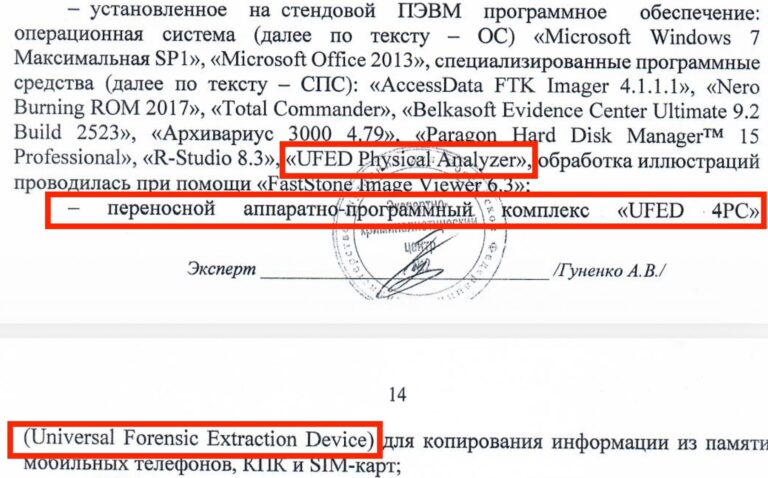
What distinguishes this case from mere allegation is the convergence of two entirely independent evidentiary streams. Digital forensics extracted from the phone itself reveal USB connection logs from June 17, 2021, bearing a Host ID previously attributed to Cellebrite hardware. Simultaneously, Russian prosecution documents — specifically Forensic Expert Report No. 1269-17, issued by the Interior Ministry's own forensic center — name Cellebrite UFED Physical Analyzer and UFED 4PC by product name. The state's own paperwork confirmed the breach.
More Than Extraction — A Political Mapping Operation
The extraction wasn't incidental. Russian investigators combed through Pivovarov's WhatsApp, Telegram, and Viber communications with documented search queries targeting the Open Russia Civic Movement and named individuals including exiled oligarch and opposition benefactor Mikhail Khodorkovsky, human rights attorney Anastasiya Burakova, and Pivovarov's partner. This was intelligence gathering dressed in legal procedure — a political network mapped under the guise of criminal investigation.
The state's own forensic report confirmed the use of Cellebrite tools to extract private communications from a political detainee whose phone was seized without consent. The vendor's contract cancellation changed nothing on the ground.
The MacBook, protected by full-disk encryption, resisted. Russian authorities documented a failed extraction attempt, and forensic analysis of the laptop corroborated this — matching failed login attempts on the same date. Pivovarov never provided the key, and the machine held. It is a point worth noting: encryption worked where policy failed.
The Installed-Base Problem That Vendors Prefer Not to Discuss
Cellebrite's public response to the findings characterizes any post-March 2021 use of its hardware as entirely unauthorized, occurring without the company's support or consent. That framing is legally defensible. It is operationally insufficient.
The core issue is architectural. Cellebrite's UFED platform was engineered to function offline, without continuous cloud connectivity or license validation tied to active contracts. When Russia's contracts were canceled, devices already in the field lost future update access — but retained substantial functionality. The extraction of Pivovarov's iPhone demonstrates that existing capability was more than adequate for politically motivated forensic work well over a year after the supposed cutoff.
This isn't an edge case. Researchers have documented that Russian and Belarusian authorities developed systematic methods to continue leveraging legacy Cellebrite hardware in political prosecutions after the contract termination. The offline design made meaningful enforcement nearly impossible for the vendor itself.
From Contact List to Target List
The implications extend beyond Pivovarov's individual case. Several individuals whose names appeared in Russian authorities' documented search queries of his phone later emerged as targets in phishing campaigns attributed to COLDRIVER, the FSB-linked threat actor known for targeting Russian opposition figures in exile. Burakova received a malicious attachment but did not open it. No direct causal chain has been formally established, but the operational logic is straightforward: an activist's extracted contact list becomes a ready-made targeting roster for the next intelligence operation.
Pivovarov was convicted in July 2022 on charges of leading an "undesirable" organization — the designation Russia applied to Open Russia after effectively banning it. The European Court of Human Rights subsequently found that designation incompatible with the European Convention on Human Rights. He was released in August 2024 as part of a prisoner exchange.
A Pattern Across Borders
Russia is not an isolated case. Forensic evidence of Cellebrite misuse in political and civil society contexts has now been documented in Serbia, Kenya, and Jordan. The pattern suggests systemic risk inherent in selling powerful device-cracking tools to governments with poor human rights records, regardless of the contractual safeguards attached at the point of sale.
Cellebrite has signaled a shift toward subscription-based licensing models in which tools cease functioning when contracts expire, theoretically closing the installed-base loophole. Whether that architectural change will be implemented comprehensively — and whether it will prove enforceable — remains an open question.
What You Should Do
The Pivovarov case is a forensic record of what happens when powerful surveillance technology outlives the commercial relationship that was supposed to constrain it. The phone was opened. The data was searched. The contacts were logged. The tool worked exactly as designed — and that is precisely the problem.


