
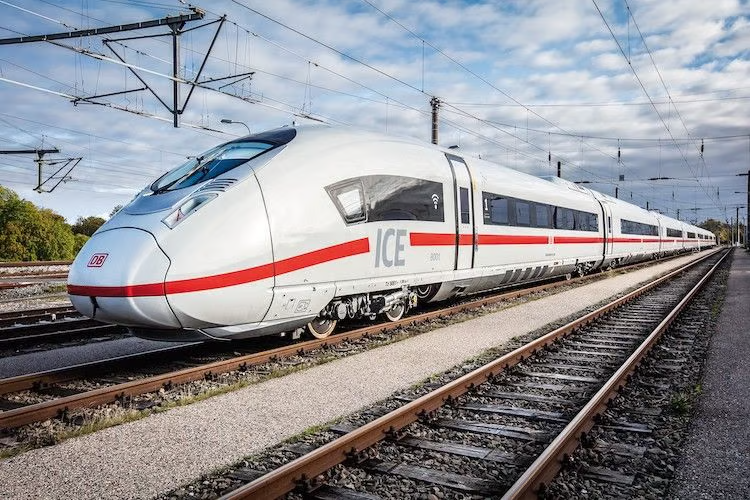
For approximately two and a half hours on the night of June 23rd, every train in Germany stood still. Not because of a storm, not because of a strike, and not — as far as investigators can determine — because of any hostile act. An aging radio communications standard that underpins the entire German rail network simply failed, and when it did, there was no fallback.
The incident represents one of the clearest illustrations in recent memory of a concept that cybersecurity and infrastructure resilience professionals have long warned about: the single point of failure embedded so deeply into critical systems that its absence becomes catastrophic, and often invisible, until the moment it disappears.
One System, One Country, Zero Trains
The technology at the center of this event is GSM-R — the Global System for Mobile Communications for Railways. It is, in essence, a railway-specific implementation of 2G cellular technology, deployed across Europe since the turn of the millennium as the backbone for voice and data communication between train operators and control centers. Without a live GSM-R connection, safely dispatching or moving trains becomes operationally impossible. When the system went dark, the entire Deutsche Bahn network — intercity express routes, regional services, municipal S-Bahn lines across Berlin, Stuttgart, North Rhine-Westphalia, and beyond — ground to a halt simultaneously.
Deutsche Bahn's CEO addressed media in the early hours, acknowledging publicly that leadership did not yet understand what had caused the failure. Engineers identified the root cause within roughly ninety minutes and restored service just before 1:00 AM, but the damage to public confidence — and to the broader conversation about infrastructure resilience — was already done. The company issued apologies, arranged alternative transport, and offered compensation to affected passengers. What it could not easily explain was why a modern national railway depended entirely on a single communications layer with no apparent redundancy.
The Hidden Risk of Legacy Dependency
From a security and resilience perspective, this incident demands more scrutiny than a routine service disruption. GSM-R is a technology category that the industry has known for years it must replace. Deutsche Bahn has contracted with a major telecommunications equipment vendor to migrate to a 5G-based successor standard known as FRMCS — the Future Railway Mobile Communication System. That migration is underway, but it has not been completed. In the interim, a 2G-era system continues to serve as the sole communications lifeline for one of Europe's most extensive rail networks.
The gap between acknowledging the need to modernize and actually completing that modernization is precisely where critical infrastructure becomes most vulnerable — whether to technical failure, environmental stress, or deliberate attack.
The technical root cause of this specific failure has not been publicly disclosed. No evidence of a cyberattack or physical sabotage has emerged. But that near-miss framing should not be reassuring. A system that fails spontaneously under normal operating conditions, with no apparent external pressure, is arguably more concerning than one that fails under attack — because it suggests the architecture itself is brittle in ways that may not be fully mapped.
A Broader Pattern Across European Rail
This event does not exist in isolation. European railway infrastructure has faced a series of deliberate and accidental disruptions in recent years that collectively illustrate how exposed this sector remains. Polish rail networks were subjected to coordinated radio frequency interference attacks in 2023, with investigators pointing toward hostile state involvement. Czech transport officials subsequently warned publicly that Russian-linked actors had made thousands of attempts to interfere with railway systems across the continent, framing rail infrastructure as a strategic target in the context of ongoing geopolitical tensions surrounding the war in Ukraine.
Railway networks serve as critical logistics arteries — for passengers, for freight, and increasingly for the movement of military and humanitarian supplies across European borders. That dual-use strategic importance makes them attractive targets and raises the stakes of any resilience gap, whether it originates from a software fault or a sophisticated threat actor.
What Critical Infrastructure Operators Must Confront
The German rail outage is not a cybersecurity incident in the traditional sense. But it is unambiguously an infrastructure resilience failure, and the lessons it surfaces are directly relevant to every organization operating systems where availability is non-negotiable.
Key Takeaways
Germany's trains are running again. The deeper question — whether the institutions responsible for critical infrastructure have absorbed what this incident actually demonstrated — will take longer to answer. For those who manage systems where failure is measured not in downtime metrics but in public safety consequences, the answer cannot come slowly enough.


