
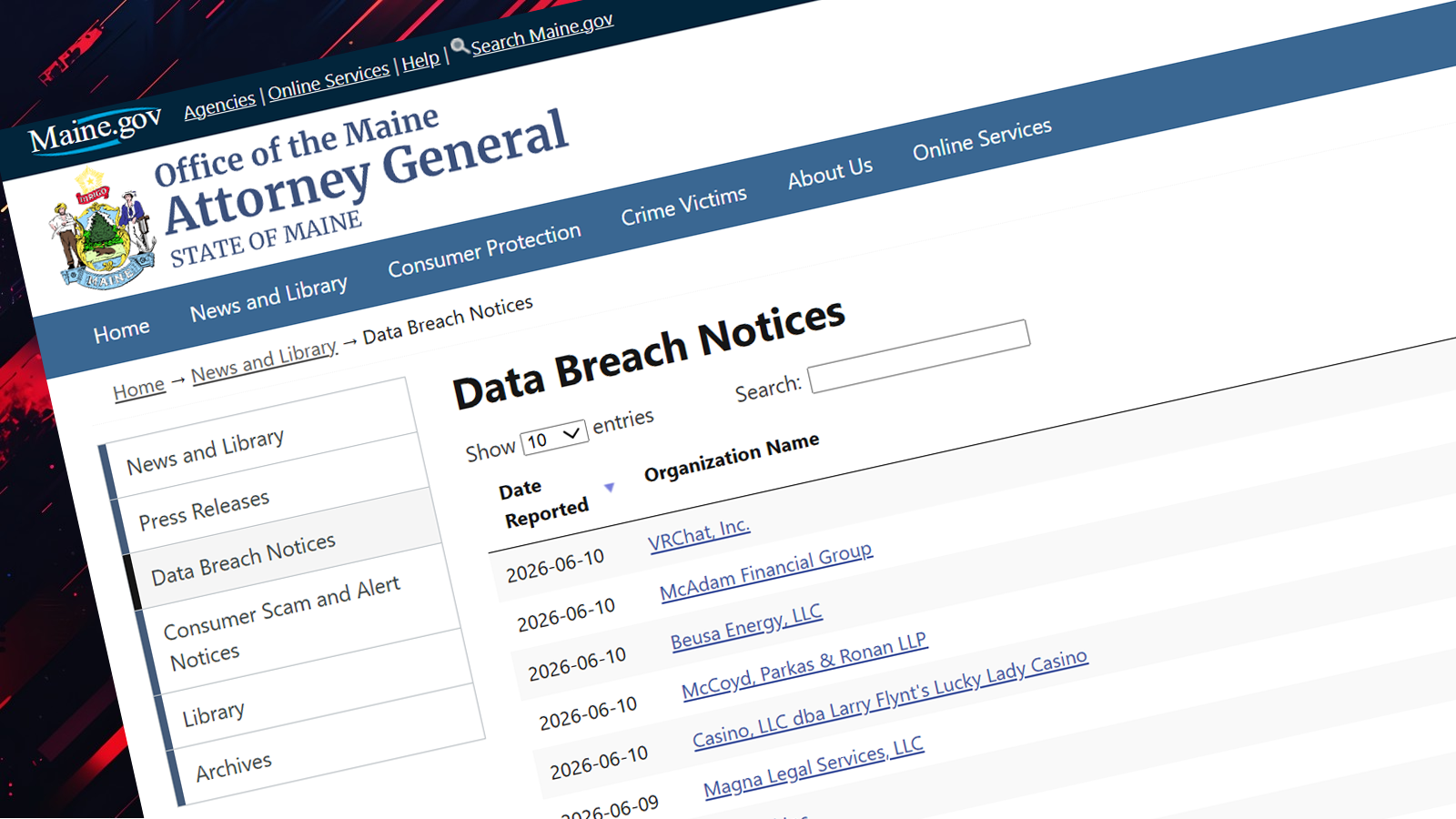
A concerning new trend has emerged in the cybersecurity landscape: malicious actors are exploiting state breach notification systems to spread false information about data incidents. Maine's breach disclosure portal has become ground zero for this disinformation campaign, with fraudulent submissions targeting major technology companies and creating unnecessary panic among users.
The Anatomy of Digital Deception
Recent investigations have uncovered sophisticated fake breach notifications submitted to Maine's official portal, including a fabricated incident allegedly affecting VRChat's 2.4 million users. The fraudulent filing claimed hackers accessed the virtual reality platform's cloud infrastructure between May 10-12, compromising usernames, email addresses, subscription data, and login histories.
What makes these false reports particularly insidious is their attention to detail. The fake VRChat notification included comprehensive breach response documentation, complete with forensic investigation timelines, remediation steps, and user protection guidance—all hallmarks of legitimate incident disclosures.
VRChat's leadership has categorically denied the breach occurred, confirming that neither the incident nor the supposed employee who filed the report exists within their organization. Similarly, a fabricated Discord breach notification claimed 10 million users were affected, despite containing obvious inconsistencies like impossible timeline discrepancies and placeholder contact information.
Systemic Vulnerabilities in State Reporting
The root of this problem lies in Maine's disclosure system architecture. Unlike federal reporting mechanisms or industry-specific frameworks, the state portal accepts submissions without preliminary verification. Any individual can complete the online form and have their claims published immediately to the public database.
This automated publishing process creates a dangerous window where false information spreads before companies become aware of the fraudulent filings. The reputational damage occurs instantly, while correction efforts take days or weeks to resolve through official channels.
The lack of verification protocols transforms what should be a trusted information source into a potential vector for coordinated disinformation campaigns.
Maine's Attorney General office acknowledged this verification gap, stating they possess no independent knowledge of submitted breaches and rely entirely on filer-provided information. While they've committed to removing flagged fraudulent entries, the reactive approach leaves organizations vulnerable to reputation attacks.
Implications for Corporate Security Teams
These incidents represent a new category of cyber threat that extends beyond traditional attack vectors. Security teams now face the challenge of monitoring not just their technical infrastructure, but also public disclosure databases for fraudulent claims against their organizations.
The sophisticated nature of these fake filings suggests organized threat actors with detailed knowledge of breach notification requirements. They understand regulatory language, incident response procedures, and the specific data types commonly affected in legitimate breaches.
For security leaders, this development introduces additional monitoring responsibilities. Teams must now establish processes to detect false breach claims across multiple state jurisdictions, as Maine's system likely represents just one vulnerable portal among many.
Detection and Response Considerations
Organizations should implement monitoring for their company names across state breach databases, particularly in jurisdictions with minimal verification requirements. Early detection of fraudulent filings enables faster response and limits potential reputational damage.
The financial implications extend beyond immediate reputation management. False breach notifications can trigger unnecessary incident response activities, legal consultations, and customer communications—all representing significant operational costs for targeted organizations.
What Security Leaders Should Do
This emerging threat highlights a critical gap in our cybersecurity information ecosystem. As organizations invest heavily in technical defenses, threat actors are finding success through regulatory system exploitation. The solution requires both technological monitoring capabilities and policy reforms to restore trust in official disclosure mechanisms.
The Maine incidents serve as a warning that cybersecurity teams must expand their threat models beyond traditional attack vectors. In an era where information warfare intersects with cybersecurity, protecting organizational reputation becomes as crucial as defending technical infrastructure.


