
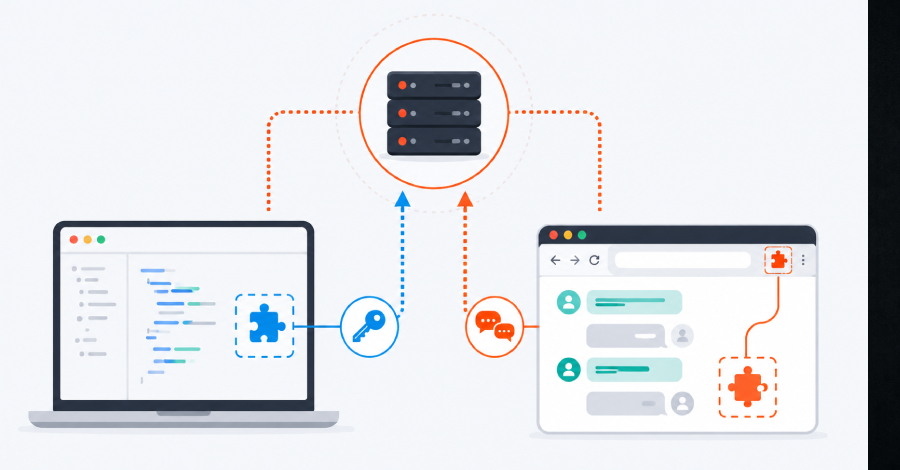
Developers have become the latest high-value targets in a sophisticated supply chain attack, as cybersecurity researchers expose a coordinated campaign distributing malicious plugins through the JetBrains Marketplace — one of the most trusted repositories in the software development ecosystem. The operation, which deployed no fewer than 15 counterfeit plugins, demonstrates how threat actors are rapidly evolving their tradecraft to exploit the AI development tooling boom.
The Anatomy of the Attack
Each malicious plugin was carefully crafted to impersonate a legitimate AI coding assistant, presenting convincing feature sets built ostensibly on DeepSeek and other popular large language models. The fake tools promised exactly what modern developers crave: inline chat assistance, automated commit message generation, intelligent code review, bug detection, and unit test scaffolding. On the surface, these were compelling productivity tools. Beneath that veneer lay a stealthy credential harvesting engine.
Once installed inside a developer's IDE, the plugins quietly intercepted AI provider API keys — credentials that grant access to expensive, high-capacity AI inference services and, critically, can expose sensitive organizational data transmitted through those APIs. The implications extend far beyond simple credential theft. AI provider keys often carry billing authority worth thousands of dollars monthly, and the prompts sent through them may contain proprietary source code, internal architecture details, and confidential business logic.
"The attack surface created by AI tooling integration is vastly underestimated. Developers extend implicit trust to productivity plugins, and adversaries are now systematically exploiting that trust."
Chrome Extensions Complete the Kill Chain
The campaign did not stop at IDE infiltration. Alongside the JetBrains plugins, the threat actors deployed companion malicious Chrome extensions designed to intercept and exfiltrate conversations occurring directly within AI chatbot web interfaces. This two-pronged approach — targeting both the development environment and the browser — reflects a mature operational design aimed at maximum data capture across the full spectrum of a developer's AI-assisted workflow.
Browser-based chatbot sessions frequently contain sensitive queries: developers routinely paste code snippets, database schemas, internal API documentation, and business logic into tools like ChatGPT and Claude to solicit assistance. Capturing these conversations grants attackers an extraordinarily rich intelligence feed into an organization's most sensitive technical assets.
Why Developers Are a Prime Target
The security community has long recognized that developers occupy a uniquely privileged position within any organization. Their workstations touch production systems, cloud infrastructure credentials, source code repositories, and deployment pipelines. Compromising a single developer machine can cascade into a full organizational breach.
The pivot toward AI tooling as an attack vector is a logical evolution. As AI coding assistants become standard fixtures in development workflows, the plugin ecosystems supporting them represent a rapidly expanding and relatively immature attack surface. Marketplace vetting processes, even at reputable platforms, struggle to keep pace with the volume and sophistication of submissions. Attackers are exploiting this gap with increasing confidence.
Indicators of a Coordinated Operation
Several characteristics distinguish this as a deliberate, coordinated campaign rather than isolated opportunistic malware:
What You Should Do
The immediate and longer-term response to this campaign requires action at both the individual developer and organizational levels.
For Individual Developers
- Audit all currently installed JetBrains plugins and remove any AI assistant tools that cannot be verified through official vendor channels or well-established open-source repositories with transparent commit histories.
- Rotate AI provider API keys immediately if there is any possibility of exposure, and review billing dashboards for anomalous usage spikes that may indicate unauthorized utilization.
- Treat browser extensions with the same scrutiny as endpoint software — review permissions carefully and remove any extensions of uncertain provenance.
- Avoid pasting sensitive organizational data, credentials, or proprietary source code into public AI chatbot interfaces without organizational authorization and appropriate data handling controls.
For Security and Engineering Leadership
- Implement a formal plugin and extension allowlisting policy across developer toolchains, requiring security review before installation of new IDE plugins or browser extensions.
- Deploy data loss prevention controls that flag or block transmission of API keys, credentials, and sensitive code patterns to external endpoints.
- Establish AI tooling governance that defines acceptable use policies for external AI services and governs what categories of data may be submitted to those services.
- Consider centralized, organizational AI gateway solutions that proxy developer AI usage, enabling monitoring, key management, and data classification enforcement.
The Broader Lesson
This campaign is a bellwether for a category of threat that will intensify. As AI tooling becomes infrastructure, it will be treated as infrastructure by attackers. Security teams that have not yet incorporated developer toolchain security into their threat models — including IDE plugins, AI service integrations, and browser extensions — are operating with a significant blind spot. The time to address that gap is now, before the next coordinated campaign lands in your organization's development environment.


