A critical security vulnerability in a widely-distributed third-party software development kit has exposed tens of millions of Android users to potential data theft, highlighting the growing risks posed by insecure third-party libraries in mobile applications.
The vulnerability, discovered in EngageLab's SDK, affected approximately 50 million Android devices worldwide, with over 30 million cryptocurrency wallet installations among the compromised applications. The flaw enabled malicious applications to circumvent Android's fundamental security architecture and gain unauthorized access to sensitive user data.
Breaking Android's Security Sandbox
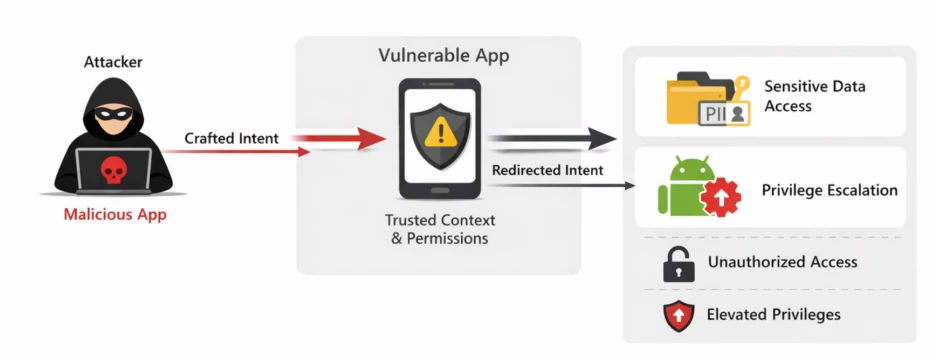
Android's security model relies on application isolation through unique user identifiers, private storage allocation, and controlled inter-app communication via intents. This vulnerability effectively dismantled these protections through an intent redirection attack vector.
The core issue stemmed from an automatically-exported component called MTCommonActivity, which the SDK added during the application build process. Many developers remained unaware of this component's existence since it only appeared in the final merged application manifest, making it invisible during routine code reviews.
Because this component was marked as exported, any application installed on the same device could interact with it directly. The component processed attacker-controlled data and constructed new intents without proper validation, creating a pathway for privilege escalation attacks.
The Attack Mechanism
The vulnerability enabled what security researchers call intent redirection attacks. In this scenario:
The attack becomes particularly dangerous due to unsafe permission flags that grant both read and write access to application data. Once triggered, attackers could access private files through the application's content providers, even when those components weren't intended for external access.
Cryptocurrency Ecosystem Under Fire
The vulnerability's impact proved especially severe within the cryptocurrency and digital wallet ecosystem. Research teams confirmed the presence of the flawed SDK in numerous financial applications available through Google Play Store, with wallet applications alone accounting for over 30 million installations.
This concentration in high-value applications amplified the potential impact, as cryptocurrency wallets typically handle extremely sensitive financial data, private keys, and transaction histories. The ability to bypass Android's security sandbox could have provided attackers with access to this critical information.
The widespread adoption of third-party SDKs in mobile development creates cascading security risks when vulnerabilities affect upstream components. A single flawed library can instantly expose millions of users across hundreds of applications.
Response and Remediation
Following responsible disclosure protocols, EngageLab addressed the vulnerability in SDK version 5.2.1 by modifying the problematic component to prevent external access. The fix involved changing the MTCommonActivity component from exported to non-exported status, effectively blocking unauthorized access from other applications.
Google subsequently removed vulnerable applications from the Play Store during the remediation process. Security researchers report no confirmed instances of active exploitation in the wild, though the vulnerability's existence created significant exposure windows before patching occurred.
Key Takeaways
This incident underscores critical security considerations for mobile application development:
- Review merged manifests thoroughly: Always examine the final application manifest after SDK integration to identify unexpected exported components or permissions
- Audit third-party dependencies: Implement regular security assessments of all external libraries and SDKs used in production applications
- Apply defense-in-depth principles: Don't rely solely on SDK security claims—implement additional validation layers for sensitive operations
- Monitor for SDK updates: Establish processes to track security advisories and updates for all third-party components
- Test integration security: Conduct specific security testing focused on SDK integration points and inter-app communication channels
Industry Implications
This vulnerability represents a growing trend in mobile security threats targeting the software supply chain. As mobile applications increasingly rely on third-party libraries for functionality, each additional dependency introduces potential attack surfaces that may not be immediately apparent to development teams.
The concentration of affected applications in the cryptocurrency sector also highlights how emerging technology ecosystems can become attractive targets for supply chain attacks. As digital wallet adoption continues growing, ensuring the security of underlying development frameworks becomes increasingly critical for protecting user assets.
Organizations developing mobile applications must implement comprehensive security review processes that extend beyond their own code to encompass all third-party components integrated into their applications.