
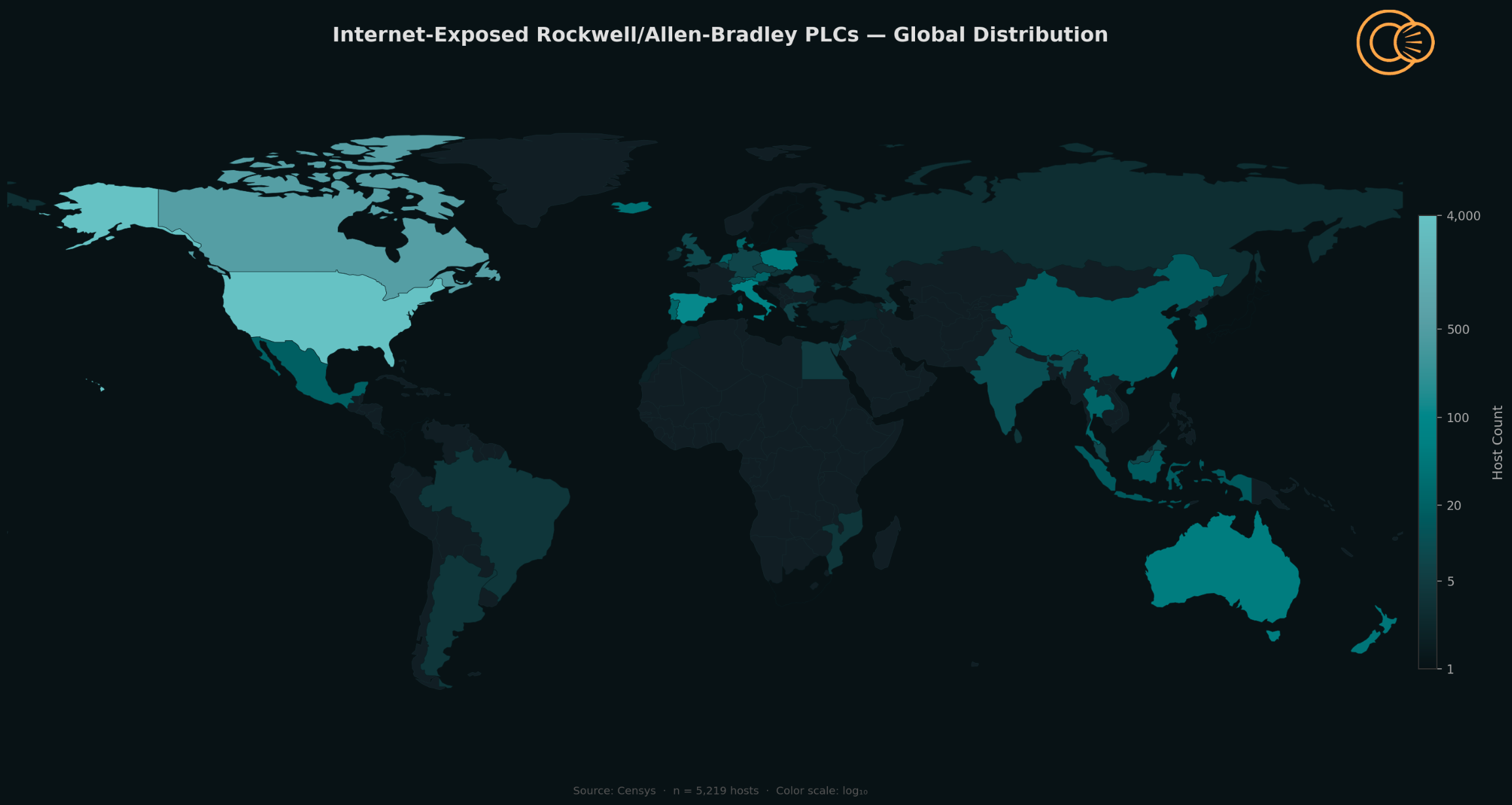
A disturbing new reality has emerged in the cybersecurity landscape: thousands of critical industrial control systems remain dangerously exposed to internet-based attacks from Iranian state-sponsored threat actors. Recent intelligence from cybersecurity researchers reveals a staggering 5,219 vulnerable programmable logic controllers (PLCs) accessible online, with the overwhelming majority—74.6%—located within United States borders.
This discovery comes on the heels of urgent warnings from federal agencies, including the FBI, CISA, and NSA, highlighting active exploitation campaigns by Iranian Advanced Persistent Threat (APT) groups targeting operational technology infrastructure across multiple critical sectors.
The Scope of Industrial Vulnerability
The exposed devices primarily consist of Rockwell Automation industrial control systems, specifically MicroLogix and CompactLogix families running outdated firmware versions. What makes this situation particularly alarming is the ease with which threat actors can identify and fingerprint these systems remotely without any authentication requirements.
Geographic analysis reveals concerning patterns beyond U.S. borders, with significant concentrations of exposed devices in Spain, Taiwan, and Italy. Iceland shows disproportionately high exposure rates relative to its industrial footprint, suggesting widespread security gaps in critical infrastructure protection.
Many of these vulnerable systems operate on cellular networks through major telecommunications providers, indicating their deployment in field operations such as utility substations and remote monitoring stations. This cellular connectivity, while providing operational flexibility, creates additional challenges for security monitoring and patch management.
Iranian APT Operations Intensify
Intelligence agencies have linked these targeting efforts to groups operating under the umbrella of Iran's Islamic Revolutionary Guard Corps (IRGC), including the notorious CyberAv3ngers collective. These threat actors have demonstrated sophisticated capabilities in manipulating industrial control systems, altering Human Machine Interface (HMI) displays, and corrupting SCADA system data.
The attackers' methodology involves compromising engineering workstations to gain deeper network access, expanding their operational footprint well beyond initially compromised systems.
The Iranian campaign has already resulted in documented operational disruptions and financial losses across government services, water treatment facilities, and energy infrastructure. The threat actors' ability to manipulate project files and alter critical system displays represents a significant escalation in the sophistication of nation-state attacks against industrial targets.
Compound Security Risks
Analysis of the exposed infrastructure reveals additional concerning vulnerabilities that compound the primary threat. Many affected systems run multiple services beyond their core industrial protocols, including:
This multi-service exposure creates numerous potential attack vectors, allowing sophisticated threat actors to establish persistent access and move laterally through industrial networks with relative ease.
Critical Infrastructure at the Crossroads
The current threat landscape underscores a fundamental challenge facing industrial organizations: balancing operational efficiency with cybersecurity imperatives. The widespread adoption of internet-connected industrial systems has created unprecedented visibility and control capabilities, but has simultaneously exposed critical infrastructure to nation-state adversaries with sophisticated cyber capabilities.
The Iranian targeting campaign represents more than isolated attacks—it signals a strategic shift toward leveraging cyber operations for geopolitical objectives through infrastructure disruption. This evolution demands immediate and comprehensive defensive responses from both private sector operators and government agencies.
Key Takeaways for Infrastructure Defenders
Organizations operating industrial control systems must take immediate action to assess and mitigate their exposure:
- Conduct comprehensive asset inventories to identify all internet-connected industrial systems and evaluate their exposure profiles
- Implement network segmentation to isolate operational technology from corporate networks and internet connectivity where possible
- Deploy specialized OT security monitoring tools capable of detecting anomalous industrial protocol communications
- Establish incident response procedures specifically tailored to industrial control system compromises
- Coordinate with federal agencies to report suspicious activities and access threat intelligence resources
The discovery of thousands of exposed industrial control systems serves as a stark reminder that critical infrastructure security cannot be an afterthought. As nation-state adversaries continue to target these systems with increasing sophistication, the window for implementing adequate defenses continues to narrow. The stakes—reliable power, clean water, and essential services—demand nothing less than immediate, comprehensive action from infrastructure operators and cybersecurity professionals alike.


