
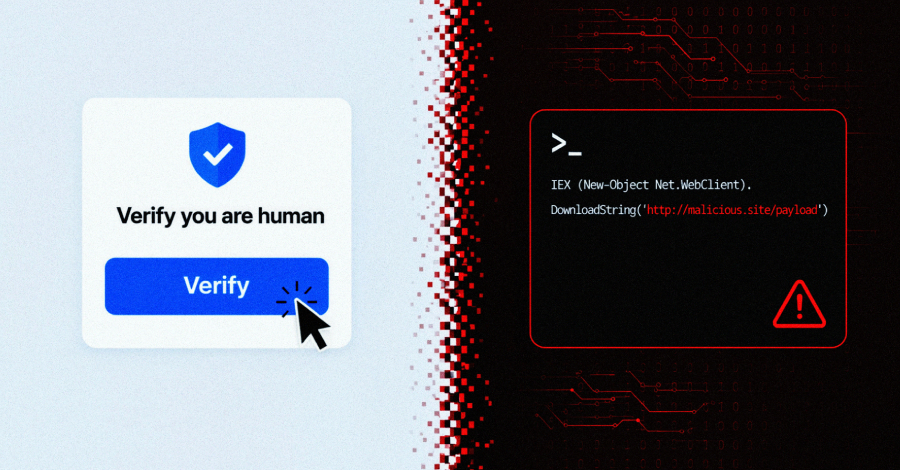
What began as a clever piece of social engineering has matured into one of the more versatile malware delivery ecosystems active today. ClickFix — a technique that tricks users into manually executing malicious commands under the guise of fixing a software error or completing an update — is no longer a novelty. It has become a platform, and threat actors are wasting no time loading it with increasingly sophisticated payloads.
Researchers across multiple cybersecurity firms have now independently documented a new wave of ClickFix-driven campaigns deploying three distinct malware loaders: BabaDeda Loader, Lorem Ipsum Loader, and Potemkin. Each represents a different operational profile, yet all three exploit the same fundamental weakness — human trust in familiar interfaces.
The ClickFix Method: Deceptively Simple, Dangerously Effective
At its core, ClickFix weaponizes user behavior rather than software flaws. Victims are presented with convincing fake error messages or update prompts — often mimicking legitimate applications like browsers, productivity suites, or IT management tools. The lure instructs the user to open a terminal or run dialog and paste in a command that silently downloads and executes a malicious payload.
This approach sidesteps many traditional endpoint defenses. Because the user initiates the execution, behavioral heuristics that flag automated processes may not trigger. It's a social engineering technique with technical depth, and its continued evolution suggests threat actors find it reliably productive.
BabaDeda Loader: Sector-Targeted and Actively Evolving
Among the three newly documented loaders, BabaDeda carries perhaps the most notable history. Earlier iterations of this loader were observed operating in narrowly defined campaigns, but activity flagged in April 2026 signals a meaningful expansion — both in targeting scope and operational sophistication.
Recent BabaDeda campaigns have been directed squarely at education and financial sector organizations, two verticals that represent high-value targets for credential harvesting, data exfiltration, and potential ransomware staging. The loader's updated capabilities suggest active development, with threat actors refining its evasion and persistence mechanisms between deployment cycles.
Lorem Ipsum and Potemkin: Expanding the Loader Ecosystem
The Lorem Ipsum Loader and Potemkin round out what appears to be a deliberate diversification strategy by the threat actors involved. Rather than relying on a single tool — which risks rapid detection and signature-based blocking — operators appear to be rotating or simultaneously deploying multiple loaders against different target profiles.
Potemkin, in particular, takes its name from a concept rooted in deception: presenting a false front to conceal what lies beneath. That framing is apt. Like its namesake, the loader is engineered to appear benign during initial execution while quietly establishing the infrastructure needed for follow-on payloads.
The simultaneous emergence of three distinct loaders tied to a single delivery technique is not coincidence — it reflects a maturing threat ecosystem where specialization and redundancy are operational priorities.
Why This Matters Beyond the Technical Details
The convergence of these campaigns around ClickFix as a delivery vector carries a strategic implication that security teams should not overlook. When multiple threat actors — or a single well-resourced group operating multiple toolsets — coalesce around one technique, it signals that the method has proven durable against existing defenses.
Organizations that have not specifically trained employees to recognize fake update prompts and fabricated error dialogs are operating with a measurable blind spot. Traditional phishing awareness training often focuses on email-based lures. ClickFix, by contrast, frequently arrives through compromised websites, malicious ads, or even legitimate-looking software portals — contexts where users may be less conditioned to exercise skepticism.
What You Should Do
The Bigger Picture
The proliferation of loaders built around a single, reliable social engineering technique is a reminder that defenders must think in terms of delivery mechanisms, not just payloads. Blocking one loader matters; understanding and disrupting the delivery infrastructure matters more. As BabaDeda, Lorem Ipsum Loader, and Potemkin demonstrate, the payload landscape will continue to shift — but the door being used to deliver them may remain stubbornly consistent until organizations close it.
ClickFix is no longer an emerging threat. It is an established delivery platform, and the security community's response needs to match that reality.


