
A Chinese-speaking advanced persistent threat group has been operating a quiet, methodical campaign against Southeast Asian government bodies and state-owned energy infrastructure — and the technical sophistication behind its latest intrusions suggests this is far from an opportunistic operation. The cluster, designated CL-STA-1062, has been active since at least March 2022, but a sharp escalation in targeting from mid-2025 onward has drawn significant attention from the security research community. Between October and December 2025 alone, researchers identified confirmed breaches at a minimum of ten separate organizations across the region.
A Campaign Built for Persistence
What distinguishes CL-STA-1062 from noisier threat actors is its operational discipline. The group doesn't rely on exotic zero-days or flashy malware families. Instead, it blends into the environment — using legitimate-looking tooling, mimicking trusted process names, and prioritizing long-term access over immediate disruption.
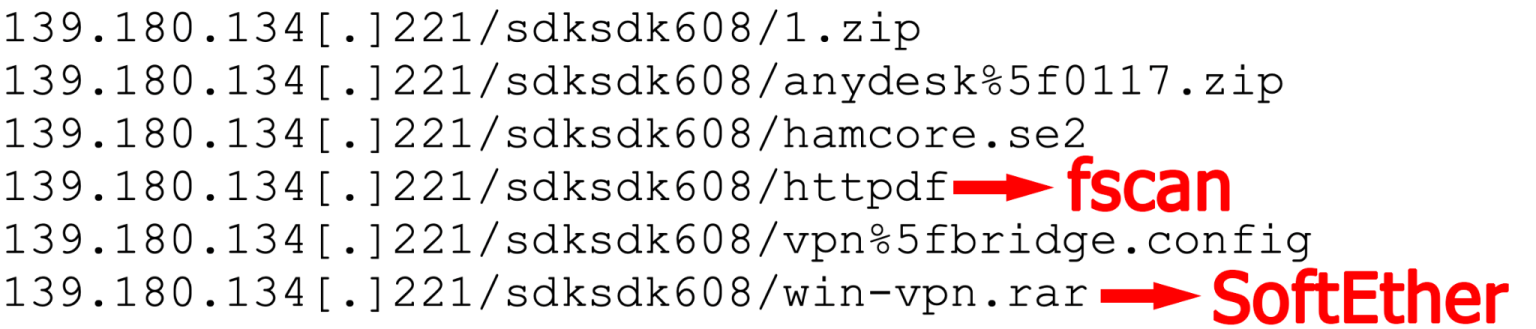
Initial access is typically achieved through ASPX web shells deployed against vulnerable web-facing applications. Once inside, the attackers conduct methodical reconnaissance before establishing persistent tunneling infrastructure using tools such as SoftEther VPN, Yuze, and VNT. To avoid triggering endpoint defenses, these utilities are disguised as VMware executables or XDR agents — with filenames like vmtools.exe, vmwared.exe, and XDRAgent.exe providing effective cover.
Privilege escalation leans on well-known open-source utilities including JuicyPotato and Mimikatz, tools that are freely available and well-understood by defenders — yet still devastatingly effective when deployed against under-resourced government environments. Stolen data is compressed into password-protected RAR archives before exfiltration, adding a layer of operational security to the extraction phase.
TinyRCT: A Custom Backdoor Built for Precision
The most technically significant development in this campaign is the introduction of a previously undocumented backdoor researchers are calling TinyRCT. Found hosted on attacker-controlled infrastructure under the filename PerfWatson2.exe — a deliberate nod to a legitimate Microsoft Visual Studio telemetry component — the implant is a lean, purpose-built C# backdoor designed for surgical data theft.
Despite its compact size, TinyRCT's feature set is remarkably complete:
cmd.exeCommunications with its hardcoded command-and-control server operate over plain HTTP, with AES-128 CBC encryption applied to the payload layer. The hardcoded encryption key — ThisIsASecretKey87654321 — is technically functional but represents a significant operational security weakness that could aid future attribution efforts. The default polling interval of ten seconds suggests the operators prioritize responsiveness over stealth at the C2 layer.
Evasion by Design
TinyRCT incorporates two particularly noteworthy anti-analysis behaviors. First, it validates its execution path on launch: if it isn't running from the %LOCALAPPDATA% directory, the process terminates immediately — a simple but effective sandbox-bypass technique. Second, its self-destruct routine leverages the native Windows choice.exe utility to introduce a deliberate three-second delay before deleting the primary executable, ensuring the process has fully released its file handle before the deletion command fires. The persistence scheduled task created during installation is also removed as part of this cleanup routine.
Perhaps the most telling forensic artifact: a line of code written in Simplified Chinese embedded within the C2 response parsing function. This kind of linguistic trace is rarely accidental, and it aligns with the broader attribution picture for this cluster.
A Clever Delivery Mechanism
TinyRCT's delivery chain demonstrates a clear understanding of how defenders think. The malware arrives inside an archive named chrome_setup.zip, which contains three components: a legitimately signed Chrome installer, a malicious .NET configuration file (chrome_setup.exe.config), and a rogue DLL named MyAppDomainManager.dll.
When the user executes the signed binary, the .NET runtime automatically reads the adjacent configuration file and loads the malicious DLL as the application domain manager — executing attacker code entirely within the context of a trusted, signed process. The loader then confirms it's running from the user's Downloads directory, retrieves the TinyRCT payload from a staging server, and installs a scheduled task named GoogleUpdaterTaskSystem140.0.7272.0 configured to execute at the highest available privilege level on every user login.
The attackers behind CL-STA-1062 reflect a pragmatic approach to capability development — blending commodity tools with purpose-built malware to maximize effectiveness while minimizing forensic exposure.
Regional Implications
The group's targeting of state-owned energy infrastructure alongside government entities signals strategic intent beyond simple espionage. Access to energy networks provides leverage — the ability to monitor, map, and potentially disrupt critical systems at a geopolitically sensitive moment. The documented case of lateral reconnaissance against a second government entity during a single intrusion underscores that CL-STA-1062 is not merely collecting data; it is actively mapping expansion opportunities within national networks.
What You Should Do
- Audit internet-facing web applications immediately. Web shell deployment via vulnerable ASPX applications is the group's primary entry vector. Ensure all public-facing applications are patched and monitored for anomalous file writes.
- Flag suspicious process masquerading. Monitor for executables using VMware or XDR agent naming conventions that don't match expected installation paths or digital signatures.
- Hunt for scheduled task abuse. Look for high-privilege scheduled tasks with names mimicking legitimate software updaters, particularly those created outside of standard software deployment processes.
- Restrict and monitor tunneling tools. SoftEther VPN and similar utilities have limited legitimate use cases in government and critical infrastructure environments. Establish baselines and alert on unexpected deployments.
- Inspect .NET configuration files alongside signed executables. This delivery technique bypasses many traditional AV controls. Behavioral monitoring of application domain manager loading events is essential.
- Correlate C2 traffic patterns. Short polling intervals (sub-30 seconds) over HTTP to non-categorized IP addresses are a strong behavioral indicator of implant activity.
CL-STA-1062 represents exactly the kind of threat that slips through the cracks of organizations focused primarily on ransomware and commodity malware. Its patience, operational discipline, and increasingly sophisticated tooling make it a serious concern for any government or critical infrastructure operator across Southeast and East Asia — and a reminder that state-aligned cyber espionage campaigns are growing more capable, not less.


