
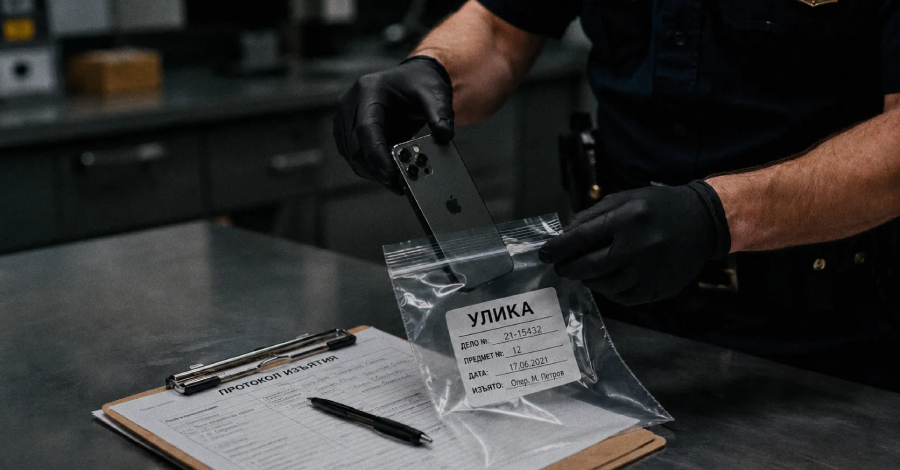
When a technology company announces it will no longer sell its products to an authoritarian regime, the assumption is that the decision carries weight. It implies enforcement, accountability, and a clean break. The case of detained Russian opposition activist Andrey Pivovarov suggests that assumption deserves serious scrutiny.
According to forensic research published by the Citizen Lab, Russian law enforcement used Cellebrite's UFED — one of the most powerful mobile device extraction tools commercially available — to access Pivovarov's iPhone in June 2021. That date matters enormously: it falls three months after Cellebrite publicly stated it had ceased sales and service operations to both Russia and Belarus.
What Cellebrite's Tools Actually Do
For those unfamiliar with the technology, Cellebrite's Universal Forensic Extraction Device is the gold standard in law enforcement mobile forensics. It can bypass device encryption, extract call logs, messages, application data, and deleted files from a wide range of smartphones — including heavily secured iPhones running modern iOS versions. Legitimate uses exist across democratic law enforcement agencies worldwide, which is precisely what makes misuse so difficult to contain.
The tool's capabilities are not subtle. When used on a device, it leaves forensic artifacts — metadata traces that trained analysts can identify. Citizen Lab researchers found exactly those traces on Pivovarov's iPhone, alongside official Russian investigative documentation that referenced data extraction consistent with UFED output. Two independent evidence streams pointing to the same conclusion is a strong evidentiary foundation.
The Gap Between Policy and Practice
Cellebrite's announcement to halt Russian sales came in March 2021, amid growing international pressure on companies enabling surveillance in authoritarian states. At face value, the move appeared decisive. In practice, the Pivovarov case illustrates a structural problem that plagues export control regimes across the technology sector: software and hardware licenses, once sold or distributed, can persist far beyond the moment a vendor turns off the commercial tap.
"Cutting off future sales does not neutralize tools already deployed in the field. Pre-existing licenses, cached updates, and knowledge transfer ensure operational continuity long after the ink dries on a press release."
This is not unique to Cellebrite. The same dynamic appears across cybersecurity and dual-use technology sectors — from telecommunications interception platforms to network monitoring software. The moment a capability is transferred, the vendor's ability to control its use diminishes sharply. Annual license renewal models offer more leverage, but only if vendors are genuinely willing to exercise it.
Why This Matters Beyond One Activist
Pivovarov was the leader of Open Russia, a movement associated with exiled opposition figure Mikhail Khodorkovsky. His arrest and the subsequent use of forensic extraction tools against him is a data point within a much broader pattern: the deployment of commercial surveillance capabilities against civil society, journalists, defense attorneys, and political opponents in countries where the rule of law is instrumentalized as a tool of repression.
The danger is not abstract. When a regime can extract the full contents of an activist's phone — including encrypted messaging applications, contact lists, and location history — the chilling effect radiates outward. Sources dry up. Networks become cautious. International contacts reconsider communication. The forensic intrusion on one person's device becomes a form of collective intimidation.
The Vendor Accountability Problem
Technology companies in the forensic and surveillance space frequently argue that they sell only to vetted law enforcement agencies and that misuse is beyond their control. This framing increasingly fails to satisfy researchers, regulators, and civil society organizations tracking end-use violations.
Several structural reforms have been proposed within policy and industry circles:
None of these solutions is technically trivial or politically straightforward. But the Pivovarov case makes clear that voluntary corporate announcements, unaccompanied by enforceable mechanisms, offer little meaningful protection to people on the ground.
What You Should Do
For Security Teams and CISOs Advising High-Risk Individuals
- Device hygiene is non-negotiable at the border: Activists, journalists, and executives traveling to or communicating with contacts in high-risk jurisdictions should operate on travel devices with minimal sensitive data.
- Enable Lockdown Mode on iPhones: Apple's Lockdown Mode significantly narrows the attack surface available to forensic extraction tools and spyware alike. It is no longer a fringe recommendation for high-risk users — it is baseline practice.
- Audit communication tools: Signal and similar end-to-end encrypted applications offer strong protection in transit, but physical device access remains the most dangerous threat vector. Disappearing message settings limit post-extraction exposure.
- Understand your forensic footprint: Organizations supporting civil society partners in repressive environments should brief those partners on what device extraction means and how to minimize stored sensitive data.
- Engage vendors on accountability: Enterprise clients of forensic technology vendors have leverage. Use it. Ask suppliers directly what their end-use monitoring policies are and what happens when violations are confirmed.
The story of Andrey Pivovarov's iPhone is, at its core, a story about the gap between stated policy and operational reality — a gap that repressive governments are practiced at exploiting. Closing it requires more than announcements. It requires architecture, enforcement, and the willingness of the technology industry to treat its own tools as the dual-use capabilities they genuinely are.


