
Everyone in cybersecurity leadership is saying the word "agentic" right now. Far fewer can explain what genuinely changes when you apply that concept to governance, risk, and compliance — or why getting it right matters far beyond satisfying an auditor.
The honest answer requires a little context. For years, GRC programs have operated on a fundamental contradiction: the systems they govern are dynamic, ephemeral, and constantly shifting, while the compliance mechanisms evaluating them are largely static, scheduled, and retrospective. Cloud infrastructure scales and contracts by the minute. Identity access is granted, modified, and revoked continuously. CI/CD pipelines never stop. Attackers exploit this gap in real time. Most compliance programs, however, are still catching up three months after the fact.
Agentic AI doesn't just speed up the old model. It changes the model entirely — and for GRC specifically, that shift is overdue.
What "Agentic" Actually Means in a GRC Context
Automation is not a new concept for compliance teams. Evidence collection scripts, robotic process automation bolted onto workflows, scheduled policy checks — these have existed for years. But most of these tools share a critical limitation: they answer only one question, and they answer it on a schedule. Did this control pass? Then they file the result and wait to be asked again.
An agent operates on three distinct principles that separate it from traditional automation:
The distinction matters because it removes the core structural weakness of traditional compliance: the assumption that a point-in-time snapshot meaningfully represents an ongoing security posture. It doesn't. It never did. Agentic architecture makes continuous assessment operationally practical for the first time.
Three Structural Shifts Worth Understanding
1. The Analyst's Role Moves From Collection to Judgment
The fear that AI will displace GRC analysts misunderstands where human value actually sits in these programs. Nobody entered this profession to chase down screenshots, ping control owners for stale evidence, or manually cross-reference policy documents against a spreadsheet. That work has always been overhead — necessary, but not the job.
When agents absorb the collection and triage layer, practitioners aren't made redundant. They're freed to do the work that actually requires expertise: contextualizing findings, making risk decisions, challenging control design, and ensuring the program reflects reality rather than optimistic documentation.
2. Compliance Cycles Become Continuous, Not Periodic
Annual and quarterly review cycles exist because of human bandwidth constraints, not because they represent an ideal cadence. They were the best available answer to a capacity problem. When agents can continuously evaluate control state against defined baselines, the capacity constraint effectively disappears.
"Are we compliant right now?" stops being a question you answer with a snapshot from three months ago and starts being one you can answer with current data.
That shift has real security implications, not just compliance implications. Continuous monitoring means drift is caught as it occurs rather than discovered during the next scheduled review cycle — often long after an attacker has already found it.
3. Trust and Auditability Become the New Bottleneck
This is the consideration that gets underweighted in most agentic AI conversations. Once the effort of evidence collection becomes cheap, the meaningful question becomes whether you can trust what the agent did — and prove it. If agentic workflows simply shift manual labor to a verification tax on the back end, the efficiency gains erode quickly.
The governance problem worth solving isn't just automation. It's building agents that produce auditable, explainable outputs that practitioners and auditors can stand behind with confidence. Pass or fail is a compliance outcome. Confidence in the process that produced it is a security outcome.
What Building One Actually Looks Like
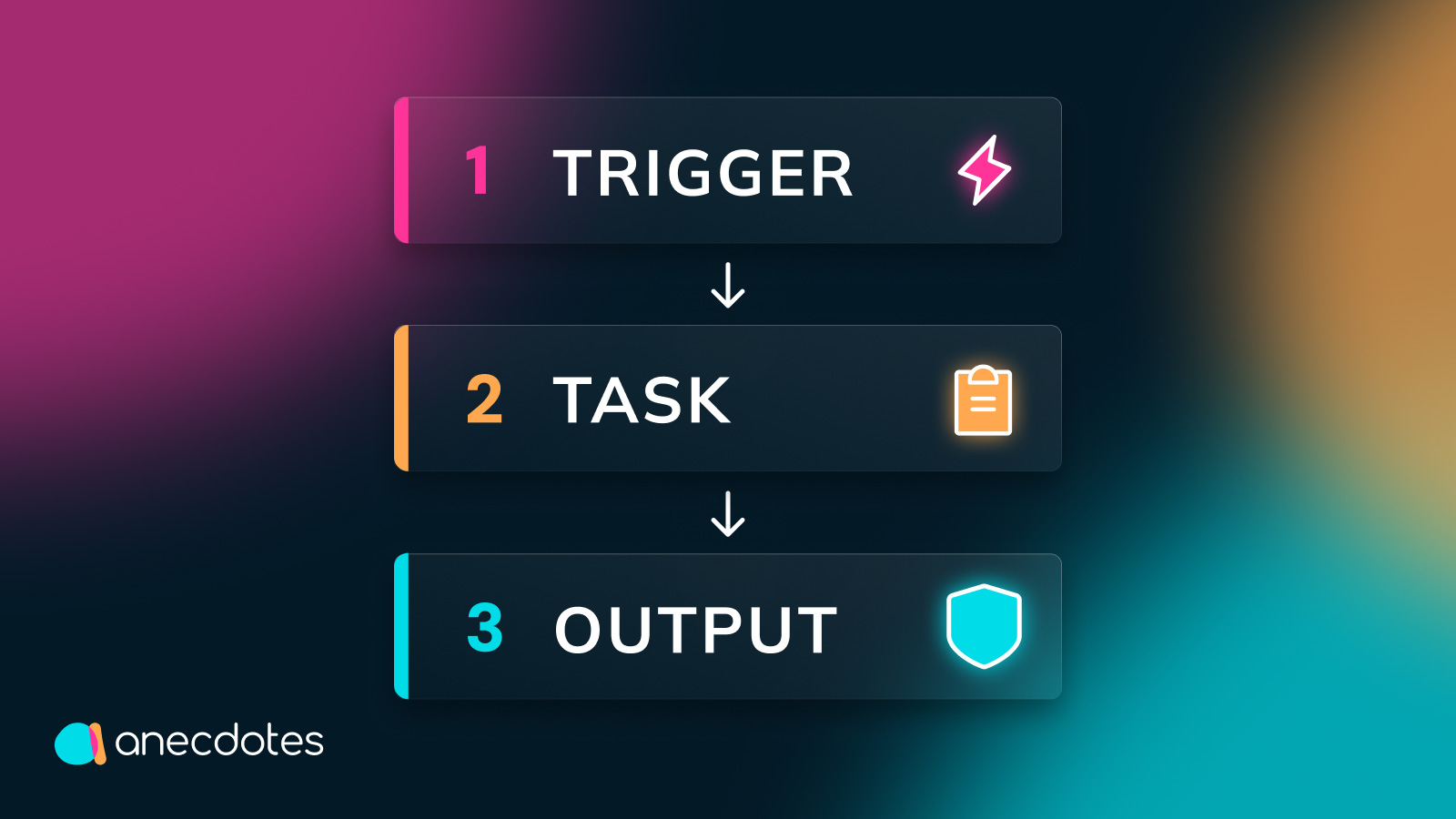
Translating architecture into practice requires three decisions for any GRC agent build:
- Define the trigger: A schedule-based trigger fires on a cadence — every Monday, every 24 hours. An event-based trigger fires the moment a condition changes: evidence goes stale, a risk level escalates, a new identity group is provisioned without enforcement policy. Event triggers are preferable for continuous monitoring because they respond to reality rather than waiting for the clock.
- Describe the task in plain language: Consider a practical example using ISO 27001:2022 control A.8.5, covering secure authentication. The instruction to the agent might read: when MFA evidence for A.8.5 is older than 24 hours, query the identity provider for current MFA enforcement state, compare against the organization's defined baseline, and if any group has fallen out of compliance, open a finding and assign a remediation task to the control owner. No code required — the instruction mirrors how you'd brief a junior analyst.
- Deploy with full auditability: The agent then executes the chain — reading live policy from the connected identity provider, comparing enforcement state per group against the defined baseline, and surfacing findings with a complete action log. Every step is traceable. The output is defensible. And the analyst reviews findings rather than hunting for them.
No-code GRC agent builders — tools that allow practitioners to configure triggers, define tasks in natural language, and deploy with a full audit trail — are making this architecture accessible without requiring engineering resources to implement it.
What You Should Do
- Audit your current GRC workflows for manual overhead. Identify where analysts spend the most time on collection and triage — these are the highest-value targets for agent automation.
- Prioritize event-driven triggers over schedule-based ones. Schedule-based automation still leaves windows of exposure. Event triggers close them.
- Design for auditability from the start. Any agent you deploy should produce a complete, human-readable action log. If you can't explain what the agent did and why, you can't defend the compliance outcome it generated.
- Keep policy decisions with humans. Agents should reason, summarize, and orchestrate. Thresholds, risk appetite, and control design decisions should remain under practitioner control — not delegated to a model.
- Use freed analyst capacity deliberately. The efficiency gains only matter if the time recovered is reinvested in higher-order judgment work: control design review, exception analysis, program strategy. Otherwise you've just automated busywork without improving posture.
The systems we govern have already gone agentic. The only question left is whether our compliance programs will catch up — or continue documenting a reality that stopped being true quarters ago.


