
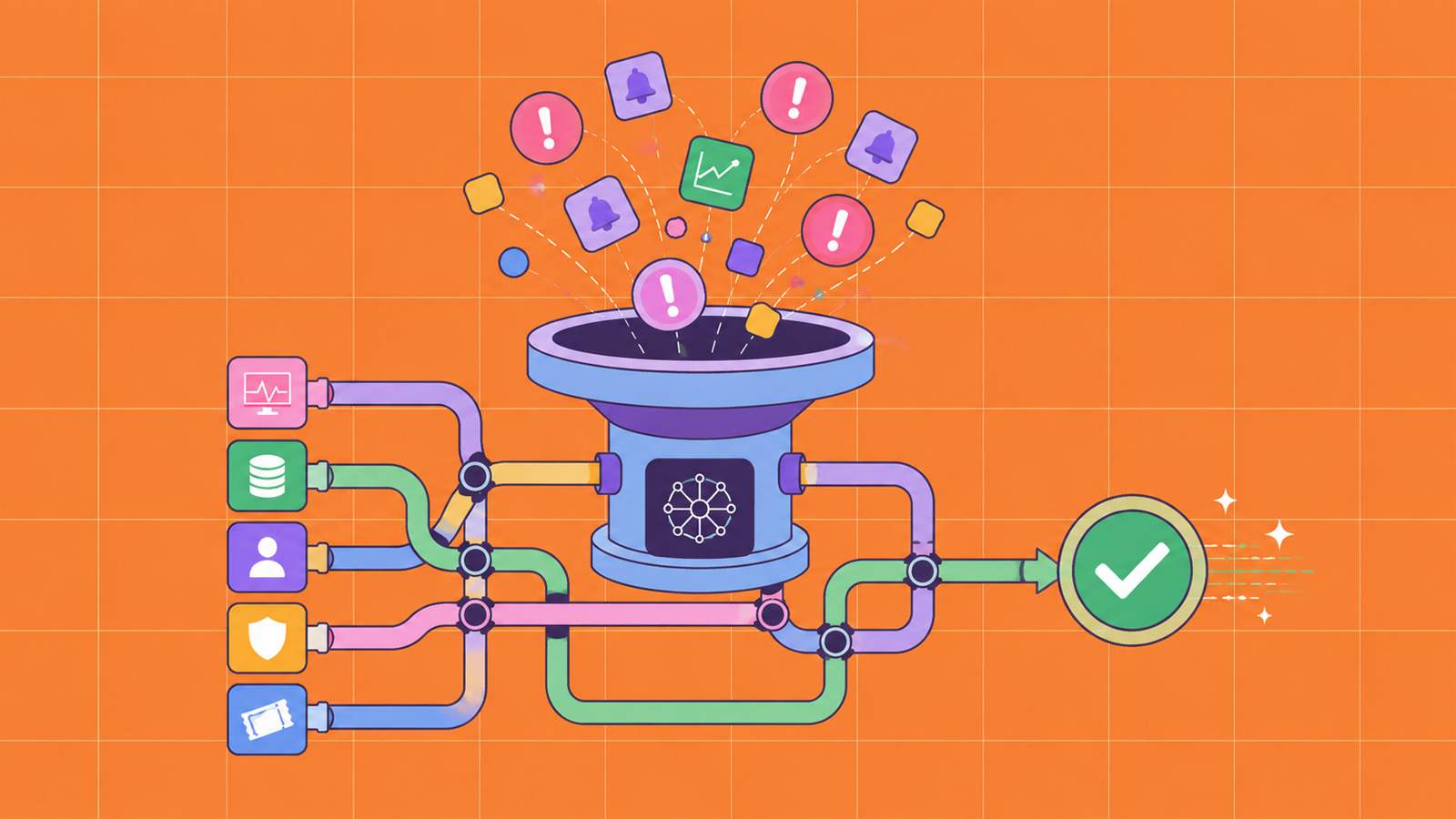
When network alerts fire, the clock starts ticking. Yet despite sophisticated monitoring capabilities, many organizations still struggle with the same critical weakness: the gap between detection and effective response. While security tools excel at identifying threats quickly, the subsequent investigation and coordination phases remain painfully manual, creating dangerous delays that amplify business impact.
The challenge isn't technological—it's operational. Modern enterprise environments deploy dozens of monitoring, infrastructure, and security tools, each generating alerts that require human interpretation, context gathering, and cross-team coordination. This fragmented approach transforms what should be rapid incident response into a complex orchestration challenge.
The Hidden Costs of Manual Response Workflows
Traditional incident response workflows suffer from predictable failure points. When an alert triggers, responders must manually query multiple systems to understand scope and impact. They spend precious minutes—or hours—determining asset ownership, gathering network context, and coordinating with the appropriate teams. Each handoff introduces delays and potential miscommunication.
This manual approach becomes particularly problematic as organizations scale their security and monitoring capabilities. More tools mean more alert sources, more data silos, and more coordination complexity. The result is a paradox where enhanced visibility actually slows response times due to information overload and process bottlenecks.
Consider a typical network security incident: an intrusion detection system flags suspicious traffic patterns. The initial alert provides basic indicators, but responders need additional context—affected systems, user accounts, network topology, and threat intelligence—before they can act decisively. Gathering this information manually from disparate tools can consume 60-80% of total response time.
Automation as the Force Multiplier
Intelligent automation addresses these workflow gaps by connecting previously isolated systems and processes. Rather than replacing human expertise, automation amplifies it by handling routine data gathering, enrichment, and routing tasks that currently consume valuable analyst time.
Modern security orchestration platforms can automatically correlate alerts with asset databases, threat feeds, and network monitoring data within seconds of detection. This instant enrichment provides responders with comprehensive context from the moment they receive an alert, eliminating the investigation delays that plague manual workflows.
AI-assisted prioritization further enhances this capability by analyzing alert patterns, business context, and historical incident data to automatically rank incidents by severity and business impact. This intelligent triage ensures critical incidents receive immediate attention while reducing alert fatigue from lower-priority events.
Coordinated Response Across Complex Environments
Beyond individual alert processing, automation excels at orchestrating response activities across multiple teams and systems. Workflow automation can simultaneously notify relevant stakeholders, create incident tickets, initiate containment procedures, and update status dashboards—all while maintaining audit trails for compliance and post-incident analysis.
Effective incident response automation reduces mean time to resolution by 40-60% while improving consistency and reducing human error in critical workflows.
This coordinated approach proves especially valuable during complex incidents that span multiple domains. Network security events often require coordination between SOC analysts, network engineers, and application teams. Automated workflows can route alerts to appropriate teams based on predefined criteria while ensuring all stakeholders receive relevant context and updates throughout the response process.
Implementing Effective Response Automation
Successful automation implementation requires careful attention to workflow design and system integration. Organizations should begin by mapping existing incident response processes to identify repetitive tasks, common delays, and coordination challenges.
Key automation opportunities include:
Integration capabilities prove crucial for automation success. The most effective platforms can connect with existing security tools, IT service management systems, and business applications to create unified response workflows that span the entire technology stack.
What You Should Do
Organizations seeking to improve incident response capabilities should evaluate their current workflows for automation opportunities. Start by documenting typical incident timelines to identify where delays occur most frequently.
Consider implementing automation in phases, beginning with high-volume, low-complexity incidents that consume significant analyst time. This approach allows teams to develop automation expertise while demonstrating measurable improvements in response efficiency.
Most importantly, view automation as an enhancement to human capabilities rather than a replacement. The goal is to eliminate routine tasks that slow response times, freeing skilled analysts to focus on complex investigation and decision-making activities that truly require human expertise.
As network environments continue growing in complexity, organizations that successfully integrate automation into their incident response workflows will maintain decisive advantages in both security posture and operational efficiency.


