
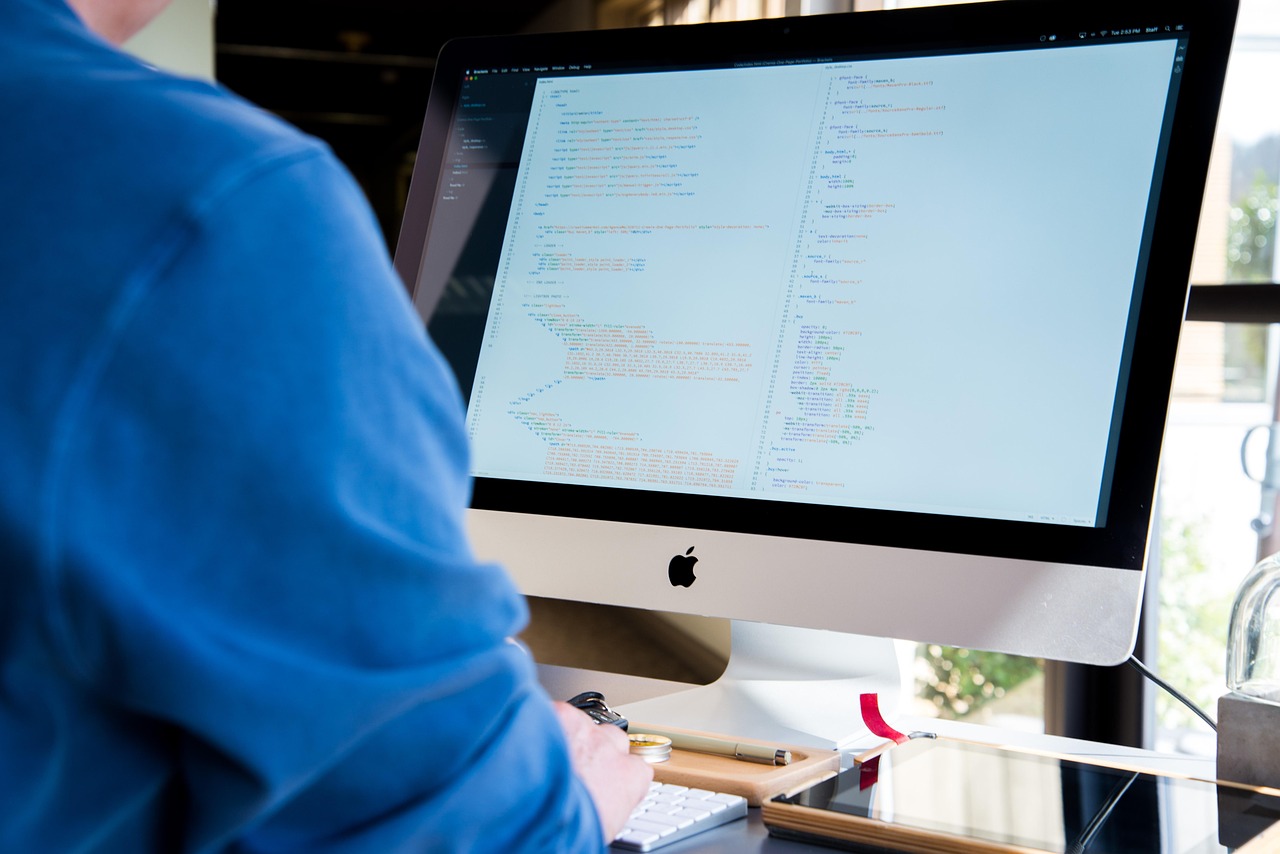
As reported by BleepingComputer, the acceleration of software development through AI tooling has reached an inflection point — one where the velocity of creation has fundamentally decoupled from the velocity of security validation. This isn't a new tension, but AI has weaponized it at scale.
The Hidden Cost of Frictionless Development
For decades, security practitioners have relied — sometimes uncomfortably — on the natural friction embedded in the software development lifecycle. Code reviews, sprint planning, deployment gates, peer approvals: each of these was an opportunity to ask "have we thought about what could go wrong?" AI-assisted development doesn't just speed up coding. It systematically eliminates those pause points.
When a developer could generate a fully functional, syntactically correct microservice in under two minutes, the psychological contract around "slowing down to think about security" breaks down. The code looks authoritative. It compiles. It passes basic tests. And it may contain injection flaws, insecure defaults, hardcoded secrets, or vulnerable dependencies that no one reviewed — because no one felt they needed to.
The risk isn't that AI writes bad code. The risk is that AI writes plausible-looking bad code faster than any team can review it.
Who Bears the Exposure?
The impact is not evenly distributed. Organizations most at risk include:
Security teams at these organizations are facing a volume problem they weren't staffed or tooled to handle. A developer using AI assistance may produce three to five times the code output of a year ago. SAST tools, threat models, and manual review processes were not designed for this throughput.
The Supply Chain Amplifier
There's a downstream dimension to this that deserves serious attention. AI models are trained on existing code repositories — including repositories that contain insecure patterns, deprecated libraries, and outright vulnerabilities. When an LLM suggests a code snippet, it may be confidently reproducing a pattern that was considered acceptable in 2018 but is now a known attack vector. The developer, trusting the tool, may not question it. The reviewer, overwhelmed by volume, may not catch it. And that code eventually ships into production — or worse, into a library consumed by thousands of downstream projects.
This is the software supply chain risk of the AI era: not adversarial injection (though that exists too), but the quiet, high-volume propagation of insecure coding patterns at unprecedented scale.
Shield53 Recommendations
What You Should Do
- Revise your AppSec program for AI-generated volume. If your SAST/DAST tooling runs once per sprint, it needs to run on every commit. Automate security gates directly in CI/CD pipelines — non-negotiably.
- Implement AI usage policies now, not later. Define which AI coding assistants are approved, what data they can access, and what categories of code require mandatory human security review regardless of AI involvement.
- Train developers on AI-specific risk patterns. Secure coding training must evolve to include prompt injection awareness, over-privileged AI-generated IAM policies, and recognition of plausibly-wrong AI output.
- Adopt secrets scanning as a hard deployment gate. AI tools frequently suggest hardcoded credentials and API keys. Tools like Trufflehog, Gitleaks, or native GitHub secret scanning should block merges, not just warn.
- Conduct threat modeling on AI-assisted features explicitly. When a feature was largely generated by an LLM, threat modeling sessions should be mandatory — the developer may not have the deep context to have caught edge cases the AI glossed over.
- Benchmark your review capacity against your generation capacity. If your team's AI tooling is producing 4x the code, your security review throughput needs to scale proportionally — through tooling, not just headcount.
The Strategic Imperative
Security leaders need to reframe this conversation for their boards and engineering peers. This isn't about being anti-AI or slowing down innovation. It's about recognizing that the leverage AI provides to developers is exactly as available to security tooling — and choosing to use it. Organizations that win the next five years will be those that automated their security validation as aggressively as they automated their development. Those that didn't will be dealing with the breach investigations that follow.
The speed of thought is now the speed of software. Security has to catch up — or get left behind in the most consequential way possible.


