
The modern enterprise security operation is, in many ways, a victim of its own ambition. Decades of tool acquisition have left the average security team managing upward of 40 discrete platforms — each generating its own alerts, dashboards, and data streams. The result is not enhanced visibility. It is paralysis. Analysts spend the bulk of their shifts triaging noise, breach dwell times hover around six weeks, and response windows continue to shrink faster than teams can act. Something has to change.
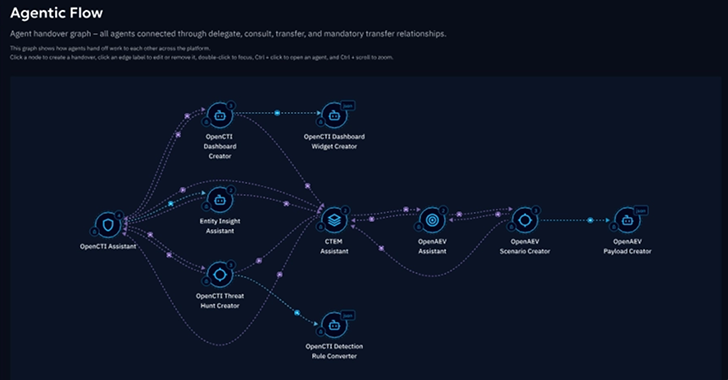
That something, increasingly, is artificial intelligence — and not the passive, assistive variety that has populated vendor slide decks for years. The shift now underway is toward agentic AI: autonomous systems capable of reasoning across disparate data sources, initiating multi-step actions, and operating independently within defined security workflows. This is not a incremental upgrade. It is a fundamental rearchitecting of how threat management works.
The Problem With the Status Quo
Before examining solutions, it is worth being precise about the dysfunction agentic AI is meant to address. Security teams do not suffer from a lack of data. They suffer from an inability to act on it coherently. Siloed tools generate overlapping alerts that require human cross-referencing. Threat intelligence sits in one platform while endpoint telemetry lives in another. Correlation that should happen in seconds instead requires hours of analyst effort — if it happens at all.
This environment creates compounding risks. Fatigue degrades judgment. Critical signals get buried beneath low-fidelity noise. And adversaries, who are increasingly leveraging automation themselves, exploit the gap between detection and response with surgical precision.
What Agentic AI Actually Means in Practice
Agentic AI systems differ from earlier generations of security automation in one critical dimension: agency. Rather than simply flagging anomalies for human review, these systems can formulate hypotheses, query multiple data sources, assess contextual risk, and execute responsive actions — all within a single orchestrated workflow.
In practical terms, this might look like an AI agent that detects suspicious lateral movement, autonomously correlates it with threat intelligence feeds and identity logs, determines that an account has likely been compromised, and initiates containment protocols — before a human analyst has even opened the alert. The analyst then reviews a completed action summary rather than a raw event queue.
"The shift from assistive to agentic AI is not about replacing analysts — it is about giving them leverage. One skilled analyst backed by an agentic system can do the work of an entire tier-one team."
This leverage matters enormously at a time when the global cybersecurity workforce gap continues to widen and experienced analysts remain among the scarcest resources in enterprise IT.
The Security Risks Agentic AI Introduces
It would be intellectually dishonest to advocate for agentic AI adoption without addressing the attack surface it creates. These systems are not immune to exploitation — and adversaries are already probing their weaknesses.
AI models, including those powering agentic security tools, can be manipulated through prompt injection attacks, adversarial inputs, and data poisoning of the training sets or knowledge bases they rely upon. An agent that queries external threat intelligence feeds, for instance, could potentially be fed manipulated data designed to suppress alerts or misdirect responses. The more autonomous the system, the higher the stakes of such manipulation.
Additionally, agentic systems require broad access to organizational data and infrastructure to function effectively — creating privileged attack surfaces that must be hardened with the same rigor applied to any high-value target.
What You Should Do
Navigating the transition to agentic AI securely requires deliberate strategy. Organizations that rush deployment without addressing foundational security hygiene will simply be automating their vulnerabilities at scale. The following steps represent a defensible path forward:
The Strategic Imperative
Agentic AI is not a product category to evaluate at next year's budget cycle. The organizations building mature, secure implementations of these systems today are establishing durable advantages in detection speed, analyst efficiency, and adversarial resilience. Those that wait will find themselves closing an ever-widening gap — not just against peers, but against threat actors who are adopting AI-powered attack automation with no bureaucratic friction slowing them down.
The security industry has long known that the defender's burden is asymmetric: attackers need to succeed once; defenders must succeed every time. Agentic AI does not eliminate that asymmetry. But deployed thoughtfully and secured rigorously, it offers the most credible path yet toward narrowing it.


